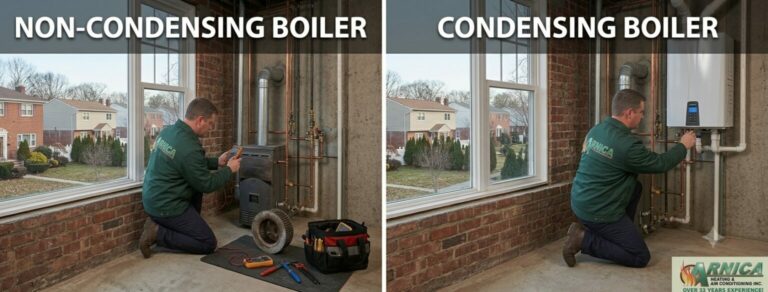
Condensing vs. Non-Condensing residential boiler installation Manhattan NY

Walk into any conversation about replacing a boiler in New York, and it usually starts with one question: condensing or non-condensing? It sounds like a technical footnote, but it actually shapes almost everything else about the project — the equipment cost, the venting work, how the fuel bills look five winters from now. Arnica Heating and Air Conditioning walks homeowners through this exact decision whenever an aging boiler is on its way out or a property needs heat from scratch.

Boilers Installation in Manhattan & Staten Island, NY

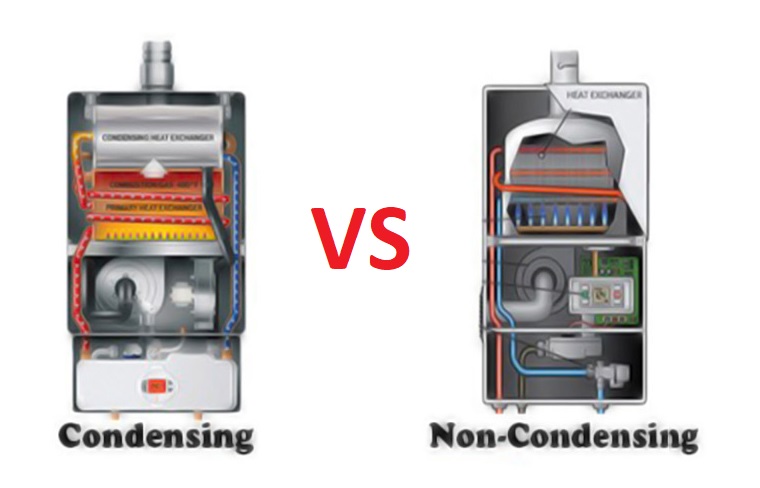
The core difference comes down to what happens to the heat trapped inside combustion gases. A condensing boiler pulls extra heat out of those gases before they leave the building and puts it back into the water. A non-condensing boiler doesn’t bother — it sends the hotter exhaust straight up the flue after grabbing only some of that available heat.

And the gap between the two isn’t small. Condensing boilers can reach efficiencies up around 99%, while non-condensing units typically top out closer to 78%.

How Do Condensing and Non-Condensing Boilers Actually Work?

A condensing boiler carries extra heat-exchange capacity built right into its design. As the combustion gases cool down inside the unit, the water vapor in that exhaust starts to condense. Rather than letting that heat slip out through the flue, the boiler grabs it.

That’s where the name comes from, plain and simple.

Condensing Boilers

Condensing boilers use larger heat exchangers and run at noticeably lower combustion-product temperatures — somewhere around 55°C. The exhaust passes through a condensing heat exchanger on its way out, so more of that usable heat gets pulled back into the system instead of wasted.

Non-Condensing Boilers

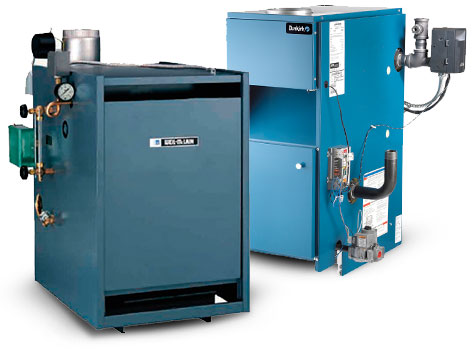
Non-condensing boilers take a simpler approach. One combustion chamber, one heat exchanger, and exhaust that leaves at much higher temperatures — closer to 180°C. A good chunk of heat just rides that exhaust right out the flue instead of warming the water.

None of this makes a non-condensing boiler a bad piece of equipment. It just means there’s heat sitting on the table that the system never bothers to pick up.

Which Boiler Is More Efficient?

Condensing wins this one, pretty decisively.

Condensing models can run at least 25% more efficient than their non-condensing counterparts, largely because they’re built to capture extra heat from the flue gases rather than let it go. Modern units can push efficiency close to that 99% mark, while non-condensing boilers settle in well below that.

For homeowners, what that translates to is simple: more of the fuel gets turned into heat you actually use.

Lower fuel consumption tends to follow, along with lower heating costs stretched across the life of the system. There’s an environmental piece here too — burning less fuel to get the same warmth generally means fewer emissions overall.

Still, efficiency numbers alone shouldn’t drive the decision. How the system gets installed matters just as much, maybe more.

New York Boiler Installation and Code Considerations

Here’s where a lot of homeowners need to slow down before they sign anything.

Swapping a boiler isn’t just a matter of pulling the old one out and dropping the new one in. Venting, drainage, combustion air, fuel supply, electrical work, controls, and the existing distribution system — all of it needs a hard look before installation day.

Condensing boilers also produce condensate as part of normal operation, and that liquid has to go somewhere proper. Venting requirements shift quite a bit too, since the exhaust runs cooler and the whole system is engineered around that condensation process.

New York adds its own wrinkles on top of that. A brownstone, an older apartment building, a co-op, a multifamily property — plenty of these have chimneys and boiler rooms built around equipment that was standard decades ago, not today.

A new boiler has to work with the building it’s going into, not just squeeze into whatever space the mechanical room happens to offer.

Condensing vs. Non-Condensing Boiler: Pros and Cons

Condensing Boilers

What’s working in their favor:

  • Higher operating efficiency
  • Better heat recovery
  • Lower fuel consumption over time
  • Reduced emissions
  • Modern sealed-combustion designs
  • Potentially lower long-term operating costs

Some combi boiler models skip the separate water tank entirely, which can make condensing systems a smarter fit for properties tight on space.

The tradeoff shows up at purchase. Condensing equipment costs more upfront, and it needs proper condensate drainage plus venting built specifically for it.

Non-Condensing Boilers

Non-condensing units usually come in cheaper at the start, and plenty of technicians working New York’s older housing stock know these systems inside and out.

The catch is efficiency. More heat escapes through the flue, and older non-condensing systems can lag even further behind — some operate in that 55% to 65% range, well below what current equipment can do.

Venting can turn into a real cost factor too, especially if an existing chimney needs work before it can handle the new setup.

Condensing vs Non-Condensing Boiler Installation Manhattan, Queens and Staten Island

Which Boiler Is Right for Your New York Property?

Nobody’s got a one-size-fits-all answer here.

A newer home, or a property going through a bigger heating overhaul, tends to be a strong candidate for condensing equipment. The efficiency gains add up over time, particularly when the system is sized right and actually operates at temperatures that let condensation happen the way it’s supposed to.

Older properties call for a closer look.

A technician should be checking radiator capacity, piping condition, heat loss, boiler sizing, chimney health, venting options, available drainage, controls — basically the whole picture of how the heating system functions as a unit.

Oversizing trips people up constantly, too. A boiler that’s way bigger than what the home actually needs ends up cycling on and off more than it should, and that alone can eat into the efficiency homeowners were counting on.

Manhattan, Brooklyn and Staten Island Boiler Replacement

New York’s housing stock doesn’t play by one set of rules.

A Manhattan apartment, a Brooklyn brownstone, a Staten Island single-family home — each one comes with its own chimney setup, mechanical-room footprint, piping layout, heating zones, and hot-water arrangement. All of that shapes what replacement actually looks like.

Arnica Heating and Air Conditioning treats every boiler replacement as a property-specific call rather than pointing homeowners toward whatever’s newest on the market.

A boiler that performs great in one building can be a rough fit somewhere else entirely.

Boiler Replacement Cost Factors

There’s no flat, reliable number for boiler replacement across Manhattan, Brooklyn, or Staten Island — too many variables move the price around, including:

  • Boiler size and efficiency rating
  • Condensing versus non-condensing design
  • Labor
  • Venting modifications
  • Chimney work
  • Piping changes
  • Condensate drainage
  • Electrical modifications
  • Controls and thermostats
  • Removal and disposal of old equipment
  • Building access and installation complexity

The equipment itself is only one line item on the bill.

A cheaper boiler can turn into an expensive job fast if the surrounding infrastructure needs real work to support it. On the flip side, spending more on a highly efficient unit can pay off once you factor in fuel savings and performance over the years ahead.

Repair or Replace Your Residential Boiler?

Age by itself isn’t a reason to replace a boiler.

If the system’s still safe, reliable, sized correctly, and running at a reasonable efficiency, regular maintenance and the occasional targeted repair can keep it going for a while yet.

Replacement starts making more sense once repairs become a regular thing, operating costs keep climbing, major parts start failing, or the boiler simply can’t keep up with what the property needs anymore.

A solid assessment looks at the entire heating system before jumping to “replace it” as the default answer.

Are Condensing Boilers Required in New York?

This one needs a careful answer, since requirements shift depending on the project, the property, the equipment involved, and the codes that apply.

Under the regulations Arnica’s original reporting covered, condensing boilers are required for boiler replacement.

Because New York City’s building and energy requirements change and vary from project to project, it’s worth having a qualified professional confirm the current rules before locking in equipment.

Can a Condensing Boiler Use an Existing Chimney?

Sometimes — but never assume it, ever.

Condensing boilers produce exhaust that’s cooler and carries more moisture. An older chimney built for hotter, non-condensing flue gases might not handle that well without some modification or relining first.

A technician needs to evaluate the chimney and venting setup before anything gets installed. Depending on what they find, a different venting approach might be the safer call.

Are Condensing Boilers Worth the Extra Cost?

For a lot of properties, yes.

That higher price tag upfront tends to get balanced out by better efficiency and lower fuel use down the road. How fast it actually pays off depends on fuel prices, how the household uses heat, proper sizing, installation costs, and whether the boiler is genuinely running in condensing mode as often as it should.

Don’t just look at the sticker price and stop there.

How Often Should a New York Boiler Be Inspected?

A yearly professional inspection is a sensible baseline for most residential systems, ideally scheduled before the heating season kicks in.

Regular service catches leaks, combustion issues, sediment buildup, worn components, control problems, and venting concerns while they’re still small — long before they turn into an emergency call in January.

Should You Repair or Replace the Old Boiler?

Start with an honest assessment, not a guess.

If a repair fixes an isolated issue and the boiler’s still fundamentally sound, repairing it is usually the smarter move. If the equipment’s grown inefficient, unreliable, hard to source parts for, or just can’t match what the property needs anymore, replacement deserves serious consideration.

Condensing technology brings real efficiency advantages to the table, but the right call still depends on the building underneath it.

Condensing boilers have shifted how people think about heating efficiency at home. They recover heat that older, non-condensing systems just let go, which can mean real savings on fuel and operating costs over time. But good technology on paper doesn’t guarantee good performance in practice.