Heating demands on New York multi-family properties are extremely high. A boiler has to do more than heat apartments through the worst winters. It must also provide hot water for the dwellings and run smoothly for long stretches at a time, delivering reliable service regardless of occupancy levels. If selected incorrectly, a boiler can run up utility expenses, deliver uneven heating, and trigger constant service calls from unhappy residents.
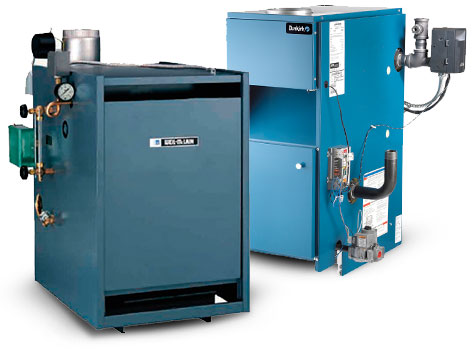
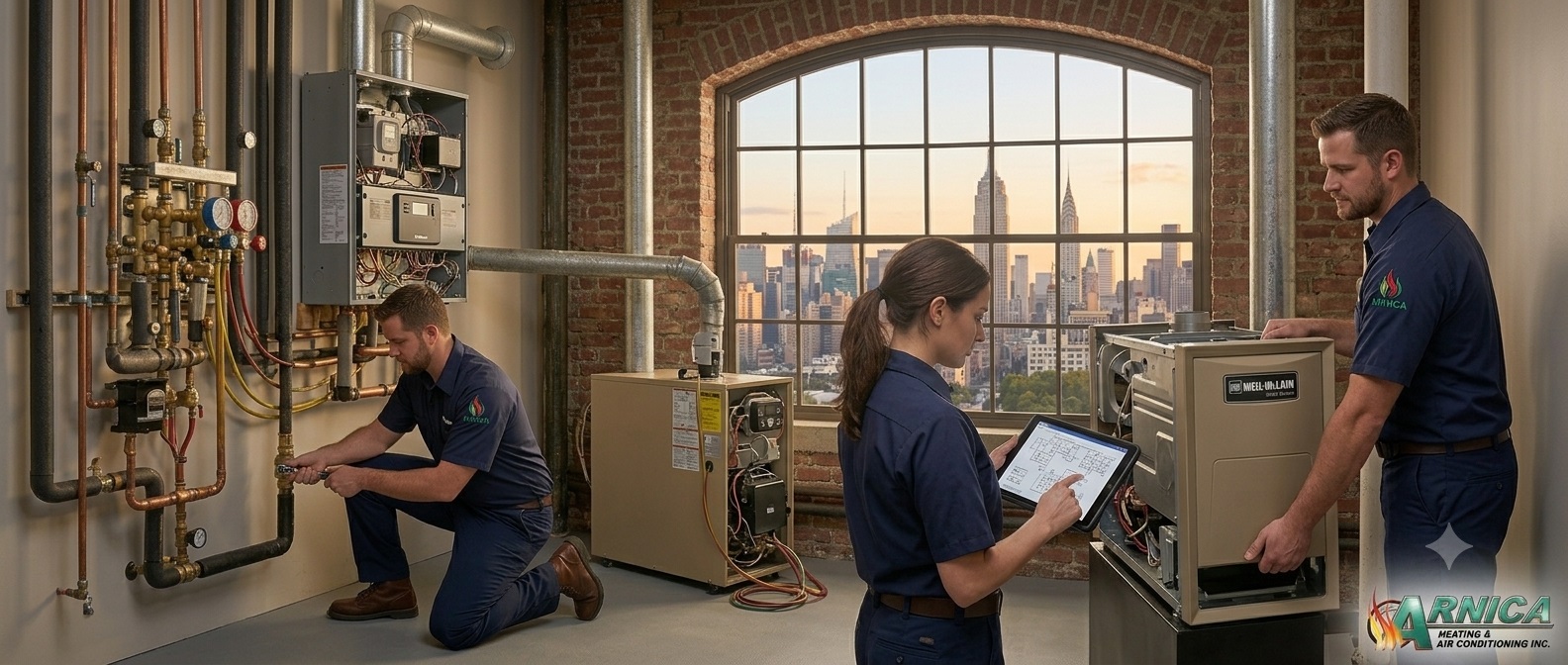
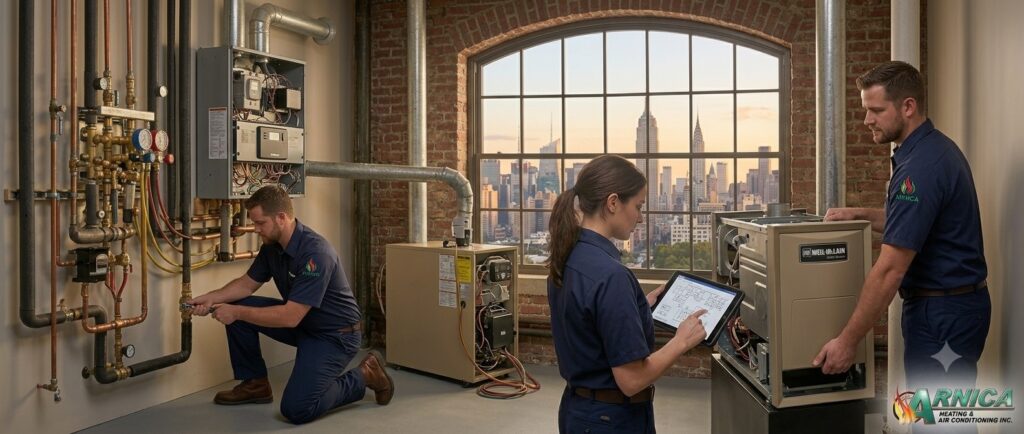
Weil-McLain boiler installation in Brooklyn, New York
Hence, a Weil-McLain boiler installation is more than just a “drop-in” equipment replacement. Installing a new boiler needs to be well thought out and properly sized based on how the building actually consumes heat.
Whether you are replacing an old cast iron boiler or putting in a high-efficiency model, choosing the right equipment will impact your building for many years to come.
Why Weil-McLain Remains a Trusted Choice
Weil-McLain has been respected by heating and cooling experts, property managers, and mechanical contractors for generations. Their boilers stand up to the toughest requirements. They are available in models that work for anything from small walk-up buildings to multi-building complexes.
Many installers stick with the brand because of its:
- Diverse selection of boiler models for both home and business use
- Proven reliability in cold-weather climates
- High-efficiency condensing options
- Durable cast-iron or stainless-steel heat exchangers
- Readily available replacement parts
- Strong service network
In a place where heating equipment runs fast and furious for most of the year, reliable performance is a given.
Boiler Model Selection
All buildings don’t need the same boiler.
That’s where most boiler installation jobs fall apart.
A 6-unit brownstone has very different heat loads than a 40-unit apartment building. The layout, insulation levels, piping system, foot traffic, and domestic hot water needs all dictate which Weil-McLain model makes the most sense.
Depending on the setup, contractors may recommend:
- High-efficiency condensing boilers
- Traditional cast iron boilers
- Modular boiler systems
- Combination heating & hot water units
It’s not about buying the largest boiler you can find. It comes down to selecting equipment that suits the real heating characteristics of the building.
When a unit is too large, it cycles on and off too often. When it is too small, it runs constantly. Oversized equipment wastes fuel and wears out components prematurely. On the flip side, an undersized unit cannot keep up with the brutal cold of northeastern winters.
Smart model selection begins with a site analysis, not a product catalog.
Boiler Capacity Planning
The most critical part of a boiler installation is how you map out its capacity.
Honestly, this is where an experienced HVAC contractor makes a difference. It takes more than just punching numbers into a calculator.
Before recommending equipment, technicians typically evaluate:
- Total heated square footage
- Number of apartments
- Ceiling heights
- Building insulation levels
- Window efficiency
- Existing radiator or hydronic systems
- Domestic hot water demand
- Local winter design temperatures
Professionals run precise heating load calculations instead of just sizing the new boiler based on the old one. That’s what counts.
Many historic New York buildings still rely on oversized boilers installed 20 to 30 years ago. Sizing a new boiler that way costs more upfront and burns through expensive fuel every winter.
Accurate sizing creates:
- Better fuel efficiency
- More consistent indoor temperatures
- Less equipment cycling
- Longer component life
- Lower operating costs
It’s one of those decisions owners glad they made every heating season.
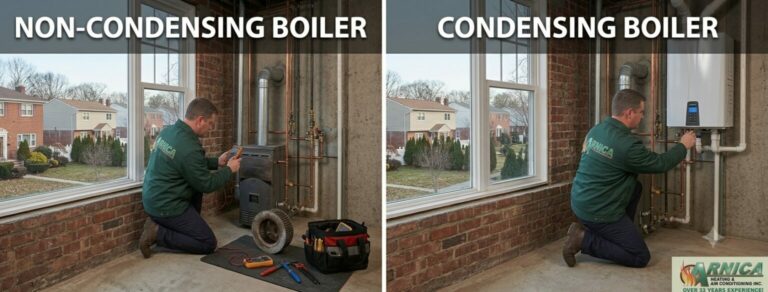
Condensing Boilers vs. Conventional Boilers
One of the biggest questions property owners ask is, “Should I go with a condensing boiler or stick with a traditional cast iron unit?”
Each has its benefits:
Condensing Boilers
Condensing boilers squeeze extra heat out of hot flue gases. Instead of letting this energy escape up the chimney like conventional units do, condensing boilers capture it to heat the water.
Benefits include:
- Higher Annual Fuel Utilization Efficiency (AFUE)
- Lower fuel consumption
- Reduced greenhouse gas emissions
- Quieter operation
- A smaller equipment footprint
These systems work remarkably well for the lower water temperatures found in radiant heating or properly balanced hydronic loops.
Conventional Boilers
Many older buildings still use traditional cast iron boilers, particularly if they already rely on high-temperature heating systems.
Advantages include:
- Simple design
- Proven durability
- Great performance on old-style radiator systems
- Lower initial equipment cost
- Easier servicing in some setups
It’s all about the building, not the trend. A trained installer assesses your distribution plumbing before moving forward with either choice.
Long-Term Boiler Maintenance
A good boiler is just the start. It needs to be looked after all through its life to keep it running effectively.
Annual boiler service typically includes:
- Cleaning burners
- Inspecting heat exchangers
- Testing combustion performance
- Checking expansion tanks
- Examining safety controls
- Verifying pressure settings
- Flushing sediment when necessary
- Inspecting venting systems
- Looking for leaks or corrosion
One of the most costly mistakes you can make is skipping maintenance altogether. Little things silently add up before causing a drop in efficiency or a sudden failure in the dead of winter. Regular inspections catch worn parts before they turn into costly emergency repairs.
Which Weil-McLain boiler is best?
The answer varies from building to building because heating demands are never identical. Weil-McLain’s commercial condensing boilers are widely used in multi-family properties because they are robust, highly efficient, and compact. For properties with older radiator systems, a cast iron model like the GV90+ or a traditional sectional boiler might fit better. The “best” boiler is ultimately the one that is right-sized for your specific load, piping configuration, and long-term goals.
How long do Weil-McLain boilers last?
As long as they are installed professionally and maintained regularly, many Weil-McLain boilers can put in 20 to 30 years of service. Lifespan depends heavily on water quality, annual tune-ups, system pressure, and proper sizing. Neglecting annual service can take years off your equipment, whereas regular overhauls help boilers outlive their design lifecycle.
Are condensing boilers worth it?
Yes, for most multi-family buildings in New York. Condensing boilers cost more upfront, but they pay off through significant fuel savings in buildings with high annual heating loads. Owners who intend to hold their investment property long-term find that operational savings easily offset the initial cost. That said, they aren’t the answer for every single building. Your existing system design and return water temperatures dictate whether a condensing unit will thrive.
Signs It May Be Time to Replace Your Existing Boiler
Aging equipment usually gives a few mild warnings before it finally gives up the ghost.
Watch for signs like:
- Uneven apartment temperatures
- Rising fuel bills
- Frequent repairs
- Strange banging or kettling noises
- Water leaks around the boiler
- Difficulty maintaining thermostat settings
- Corrosion or rust
- Parts becoming difficult to source
Upgrading an old boiler early, rather than waiting for an emergency breakdown, keeps your tenants happy and gives you time to pick the right equipment.
Getting a Weil-McLain boiler installed successfully takes a lot more than simply swapping out an old unit. Choosing a system that can handle your building’s load, run efficiently through bitter city winters, and deliver dependable comfort requires careful planning. From model selection to capacity sizing and routine maintenance, getting it right saves money and extends equipment life. Entrusting your building to a team of licensed HVAC experts ensures your system is built to last.