
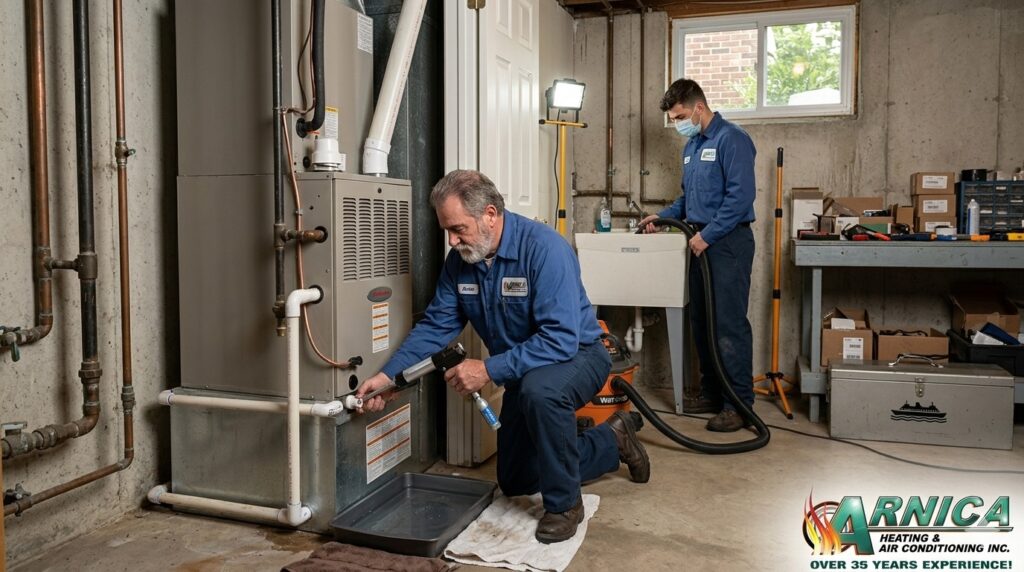
How a Clogged Condensate Drain Impacts Central Air Conditioning Repair
Central air conditioning systems in New York work harder than most people realize. As summers roll around, humidity increases, especially in places like Staten Island, Brooklyn, and Queens. As a result, your AC units need to work hard to pull out a lot more moisture from the air every single day.
Now, this moisture has to go somewhere, right. Usually, it drains out through a small pipe called the condensate drain line. Apparently, a simple component, but you turn blind eye to it. When it clogs, the problems start showing up fast.
According to most HVAC technicians, the real culprit is the blocked drain lines that trigger most emergency service calls. Modern Central Air Conditioning systems automatically turn off when they detect a blockage. Sounds smart right? But, many homeowners can’t understand why the AC suddenly stops working.
That’s where you need to treat your unit to routine cleaning that prevents all that. Not only does it protect expensive components, but it also keeps indoor air healthier. Not glamorous work, but it saves money and stress.
What Is a Central AC Condensate Drain Line and Why It Matters More in NY Buildings
How Condensate Drain Lines Remove Moisture from Your AC System
Inside every central AC system sits an evaporator coil. As warm air passes over it, moisture condenses into water droplets. It’s like water forming on a cold glass in summer.
That water collects in a drain pan and flows out through the condensate drain line. If the line stays clear, everything runs smoothly. If it doesn’t, water backs up. And water inside walls or ceilings is never a small issue.
Why New York Homes and Commercial Buildings Face Higher Drain Clog Risks
Whether it’s residential or commercial units, people in New York often deal with a mix of conditions that make clogs more likely:
- High humidity during long summers
- Older plumbing and HVAC setups in many buildings
- Dust, debris, and urban air particles
- Faster growth of algae and mold inside damp pipes
In older Brooklyn brownstones or Staten Island homes, the infrastructure itself can make things worse. Understandably, most of these buildings feature old and outdated central air conditioner, sans modern components and convenience.
New Air Conditioning Systems Automatically Shut Down When Drain Is Blocked
Modern AC often integrate safety switches. If the drain pan fills up or moisture builds beyond a limit, the system shuts off.
Because of this feature, water damage is less likely to happen. No doubt, a good feature! But many homeowners are not aware of these features, hence; assume the automatic shutdown for a sudden breakdown with no warning.
Warning Signs Your Central AC Drain Line Is Clogged
Clogs rarely happen overnight. The system usually gives a few hints before things go south.
- Water pooling near the indoor unit
- Damp spots or stains on ceilings
- A musty smell coming through vents
- AC turning off without clear reason
- Indoor air feeling humid even with AC running
- Smart thermostat alerts related to moisture or drainage
- Cooling taking longer than usual
Many homeowners in Staten Island take these for water damage. That it could be drain line doesn’t cross their head. Eventually, it causes delay which translates to the expensive repair.
Why Clogged Drain Lines Are More Dangerous in New York Than Most Homeowners Realize
Mold Growth Risks in NY Apartments and Buildings
Humidity plus standing water agitates mold and mildew growth. It grows quickly and spreads quietly.
Since most apartments, especially older buildings don’t have proper ventilation, it becomes easier for mold and mildew to take hold and harder to remove later.
Water Damage to Ceilings, Walls, and Electrical Systems
A clogged line can overflow the drain pan. Water starts seeping into nearby materials.
- Ceiling drywall weakens
- Paint bubbles or peels
- Wooden structures absorb moisture
- Electrical wiring can get affected
In extreme cases, sections of ceiling can collapse. While it doesn’t happen often, it’s not rare either.
System Shutdown and Compressor Damage
When water backs up, it can interfere with system components. The unit may stop repeatedly or fail to cool properly.
Leaving the issue untreated can damage the compressor, meaning expensive replacement.
Compliance Risks for Commercial Buildings
For business owners in New York, this goes beyond repair costs. Mold or water damage can lead to safety violations, which translate to compliance risks for commercial buildings.
Step-by-Step Guide: How to Clean Your Central AC Drain Line Safely
A basic cleaning job is manageable for many homeowners. For that, you don’t require advanced tools, except some care and patience.
What You Need
- Rags
- A wet/dry vacuum
- Distilled vinegar
- A funnel
Cleaning Process
1. Turn off power completely
Shut down the system at both the thermostat and breaker. No shortcuts here.
2. Locate the drain pan
Usually found under the indoor unit, sometimes behind a panel.
3. Remove standing water
Use rags or a vacuum to clear out the pan. If water is present, a clog is likely.
4. Vacuum the drain line
Attach the wet/dry vacuum to the outdoor drain pipe. Seal the gap with your hand to improve suction. Let it run for about a minute.
5. Flush the line
Find the access point, often a T-shaped vent. Pour distilled vinegar through it using a funnel. This helps break down algae and debris.
6. Wait and rinse
Let the solution sit for around 30 minutes. Then flush with water.
7. Test drainage
Ask someone to check outside while you run water through the system. It should flow freely.
This routine doesn’t take long. But skipping it for months can lead to a much bigger repair job.
Preventive Maintenance Strategies New York HVAC Professionals Use
Professionals in New York deal with these issues daily. Over time, they’ve leaned on a few practical methods.
Smart Condensate Overflow Sensors
These sensors detect rising water levels early and shut down the system before damage spreads.
Predictive HVAC Monitoring
Some systems now track performance patterns. They can flag unusual moisture buildup before a clog fully forms.
Anti-Microbial Drain Treatments
Technicians often use treatments that slow down algae and mold growth inside the line.
Annual Professional Maintenance
A yearly check-up can catch small issues early. It’s not just about cleaning, but inspecting the entire system.

Why NY Buildings Experience More Frequent Drain Line Clogs Than Other Cities
There are a few local factors at play.
- Older HVAC systems in Manhattan and Brooklyn
- Coastal humidity affecting Staten Island
- Long hours of AC usage during heat waves
- Dust and pollution entering the system
It’s a combination of environment and infrastructure. Even newer buildings aren’t fully immune.
When DIY Cleaning Is Safe and When You Must Call an HVAC Professional
Safe DIY Situations
- Minor clogs
- Routine cleaning every few months
- No visible mold or strong odor
Situations That Need Professional Help
- Repeated clogs in a short time
- Strong mold smell or visible growth
- System shutting down frequently
- Water damage already visible
Fixing deeper issues require advanced tools and technology, the lack of which can make things worse. At some point, it’s better to step back and call a technician.
Let’s not ignore the problem entirely. In some cases, it leads to full system replacement. That’s a cost most homeowners don’t plan for.
How Preventive Drain Cleaning Saves NY Homeowners Thousands in Repair Costs
Emergency central AC repairs in New York are not cheap. A simple service visit can already feel expensive. Major repairs can easily run into thousands.
Now compare that with basic maintenance:
- A quick cleaning every few months
- Annual inspection
- Occasional minor fixes
Preventive care can extend the life of an AC system by five to ten years. That’s a significant difference.
It also reduces the chance of sudden breakdowns in peak summer. No one wants their AC failing in the middle of a heat wave.
New York Specific Tips to Prevent Central AC Drain Line Clogs
Keeping things simple works best.
- Check the drain line visually once a month during summer
- Install a safety switch if the system doesn’t have one
- Schedule professional AC maintenance once a year
- Pay attention to thermostat alerts
- Don’t ignore small signs like odor or slow drainage
These are small habits. But they add up.
Conclusion:
A clogged AC condensate drain line does not sound like a serious issue at first. It’s small, hidden, and easy to forget. But in New York’s humid conditions, it becomes a frequent cause of system shutdowns, water damage, and costly repairs.
Cleaning the drain line is not complicated. Many homeowners in Staten Island can handle basic maintenance themselves. Still, knowing when to call a professional matters just as much.
Regular care keeps the system running efficiently, protects the home from moisture damage, and avoids unnecessary expenses. It’s a simple task, but it plays a bigger role than most expect.

Over 35 years of experienced HVAC engineer and blogger with years of experience writing about various topics related to multiple types of HVAC systems installation, repair, and maintenance. I have been in this industry since my apprenticeship in 1985. Our team emphasizes quality workmanship while ensuring customer satisfaction is our top priority.


Leave a Reply
You must be logged in to post a comment.