The Challenge: Climate Control in the New York City Landscape
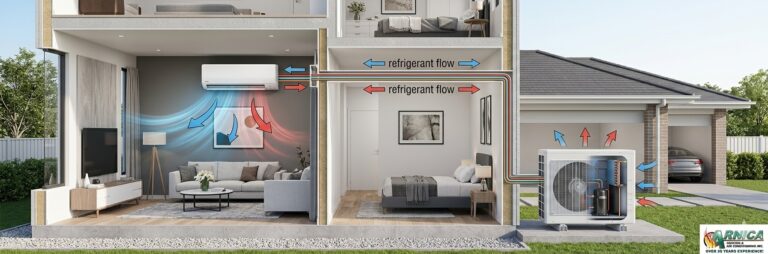
Most residential units in New York City prioritize heating and cooling. Since energy costs are increasing, apartments are getting small, zoning is an issue, and buildings are old, people seek better weather solutions. Traditional systems consume electricity, poorly distribute air, and fail to provide comfort in homes, particularly in smaller or multi-level buildings. That is why newer HVAC systems are being installed around the city to replace aging ones.
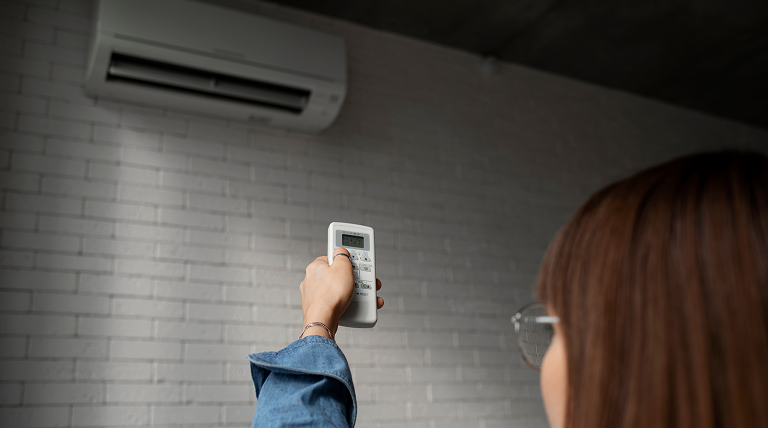
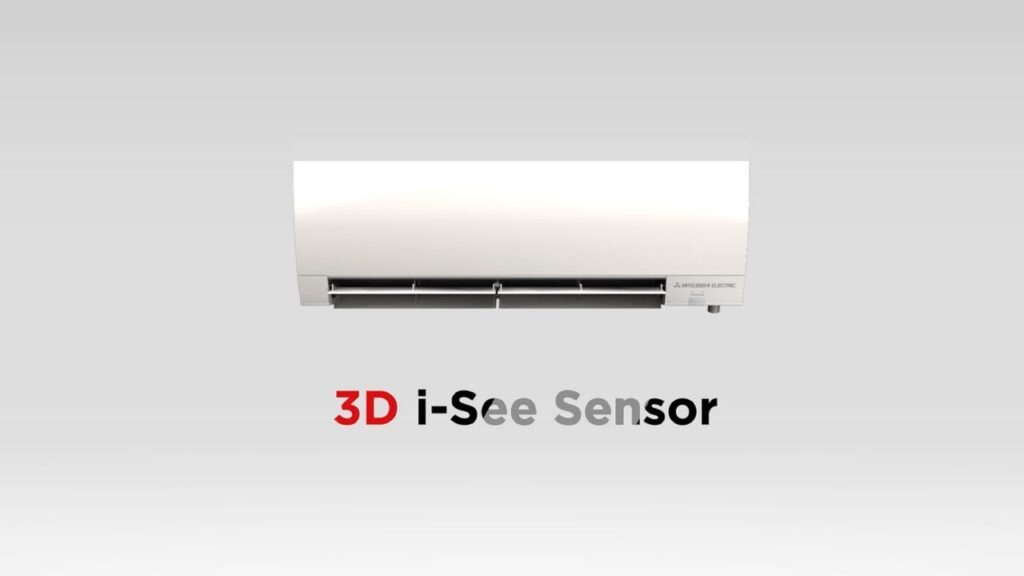
Homeowners and property owners in Brooklyn Brownstone, Manhattan, Queens, and Staten Island are seeking solutions that adapt to their lifestyles. Keeping their requirements in mind, Mitsubishi Electric designed the Mitsubishi 3D i-See Sensor specifically for this purpose. With this AI-powered technology, a ductless mini split transforms into a smart comfort system that senses, learns, and adjusts itself.
Why is the Mitsubishi 3D i-See Sensor so popular in New York?
Mitsubishi 3D i-See Sensor technology identifies people, monitors temperature, and adjusts airflow for optimal comfort.
- Precision Comfort: Detects people for targeted comfort.
- Thermal Scanning: Identifies hot and cold spots instantly.
- Smart Zoning: Adjusts airflow where needed.
- Adaptive Learning: Learns and recalls your settings.
Zoning is essential in New York’s small, variable apartments. Older homes suffer from uneven temperatures, but smart HVAC technology with wall sensors solves this problem by monitoring and adjusting conditions in every room.
As a result, high-end ductless AC installations in New York are increasingly incorporating 3D sensor technology.
How It Works: A Simple Guide to Advanced Technology
What does Mitsubishi’s 3D i-See Sensor do?
Despite its complex construction, the technology can be easily understood when reduced.

Distinguishing People from Objects:
The sensor uses infrared (IR) light, a type of invisible heat-sensing light, to tell the difference between people and walls or furniture. It identifies people by measuring their body temperature and their movement within the space. This means it can heat or cool only the areas where people are present.
Thermal Mapping and Tracking:
The system divides a room into 752 small sections called zones. It checks these zones frequently for temperature and heat patterns. For example, if one part of the room gets warmer, the system adjusts airflow to keep temperatures comfortable.
Intelligent Airflow Distribution:
The technology determines the best directions to send air and does not just blow air straight ahead. Based on where people are, it can direct heated or cooled air toward them, away from them, or spread it evenly throughout the room.
Real-World Customization for New York Residences
Life in New York City can be difficult, depending on where you reside. Mitsubishi’s 3D i-See Sensor adapts to any circumstance.
Manhattan High-Rises:
These buildings often experience uneven heating. The 3D i-See Sensor directs air downward to warm ceilings and cool seating areas.
Brooklyn Brownstones:
Multi-story design retains heat on upper floors. Smart zoning regulates airflow across levels.
Queens Homes:
The 3D i-See Sensor monitors temperatures throughout rooms to maintain consistent comfort.
Staten Island Properties:
Occupancy-based zoning provides efficient heating and cooling for larger homes by focusing on active spaces.
Control temperature precisely in each zone.
- Switch between direct and indirect airflow.
- Safely detects children and pets.
- Turns off automatically when the room is empty.
Maximizing Energy Savings in the High-Cost NYC Market
Energy efficiency in New York is a necessity, not a trend. Because electricity prices are so high in this area, defective systems can cost homeowners money each month.
How the 3D i-See Sensor Saves Money:
- Pauses “short cycling.”
- Cuts compressor use when not needed.
- Matches output to room occupancy.
- Optimizes airflow to avoid over-cooling.
Most homes save 10% to 30% compared to conventional systems. The device eliminates waste from traditional systems by operating only when necessary and only in the appropriate locations. The method is both cost-effective and environmentally friendly, helping eco-conscious New Yorkers reduce their carbon footprint.
3D i-See Sensor vs. Standard Motion Sensors and Thermostats
Regular thermostats monitor temperature in a single location on the wall. Motion sensors detect movement. They do not grasp heat transmission or seating.
Mitsubishi’s 3D i-See Sensor is more intelligent: it detects presence, body heat, displays temperatures, plans airflow, adapts to users, and autonomously improves efficiency.
- It displays temperatures throughout the entire room.
- It uses planned airflow control.
- It understands and adapts to user behavior.
- It improves energy efficiency autonomously.
Maintenance and Professional Care for New York Systems
Even the most advanced systems require regular maintenance. Regular care ensures performance and prevents sensor reading mistakes.
Essential Maintenance Tasks:
- Regular filter cleaning.
- Sensor calibration checks.
- Inspecting indoor units for dust buildup.
- Outdoor air conditioner maintenance.
- Annual professional tune-ups.
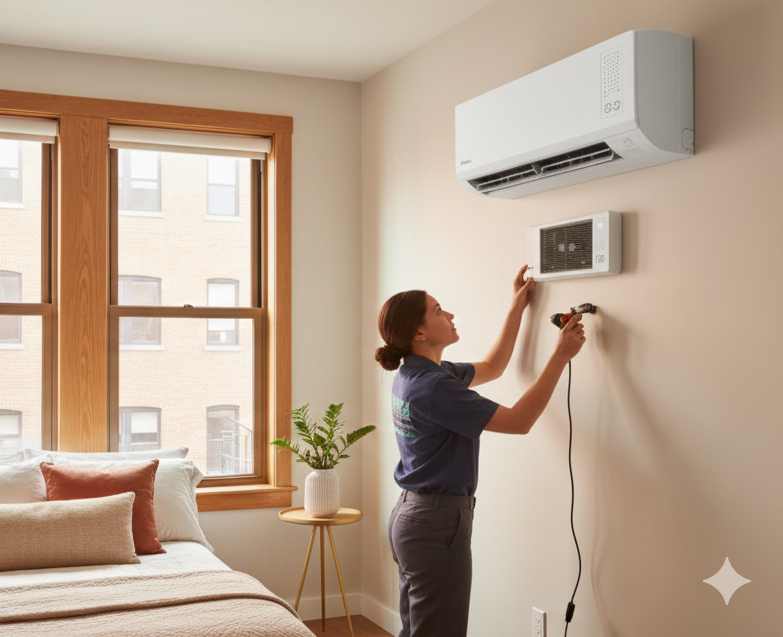
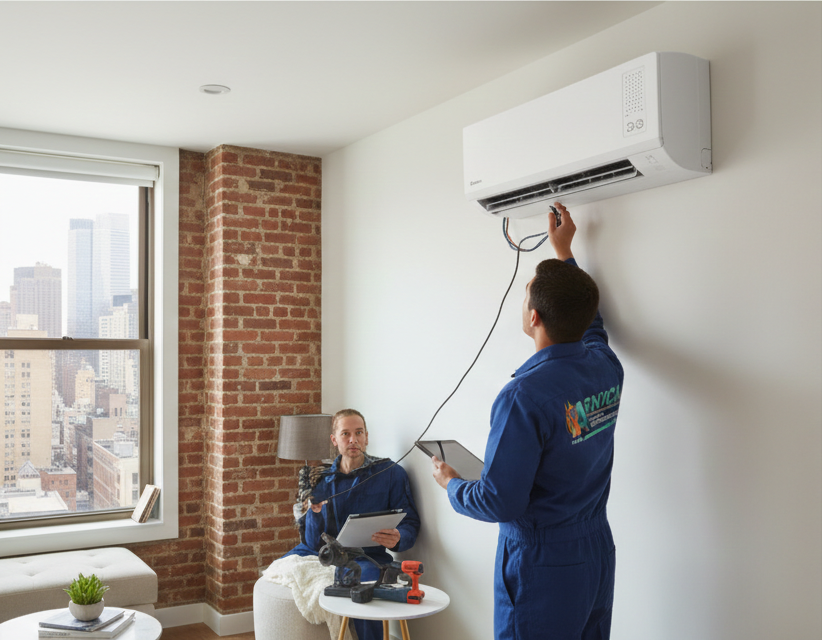
Older buildings in New York require ductless air conditioning. Prewar structures may have insufficient electrical capacity, crooked walls, and limited space, necessitating careful installation and wiring. Trained experts ensure system safety and efficiency.
Investment Value: Is It Right for Your Property?
Usually, yes, but the value is determined by the property type:
- Apartments: Makes small spaces consistently comfortable.
- Brownstones: Provide better floor-to-floor airflow.
- Townhouses: Promotes efficient multi-level living.
- Multifamily: Reduces shared energy waste.
- Home Offices: Ensures a comfortable workspace.
Energy and comfort gains can offset the initial expense within a few years.
Critical Considerations for NY Installations
Plan carefully before installing a ductless mini split with smart sensors.
Important factors include:
- Compliance with local building regulations.
- Upgrading electrical panel capacity as needed.
- Strategic wall placement to maximize the sensor’s scanning range.
- Gaining consent from co-ops or HOAs for external improvements.
Proper location is critical. If the sensor is not mounted properly, it may fail to map the room. Professional installers assess the layout and ceiling height before beginning.
Troubleshooting Common Performance Issues
Despite its reliability, the system can occasionally experience malfunctions.
- Misreading motion: Clean the lens and clear obstacles.
- Directional issues: Adjust settings or recalibrate.
- Inaccurate temperature: Check for dirty filters.
- No automatic changes: Ensure “Smart Mode” is active.
If problems persist, consult a specialist to avoid damaging sophisticated parts.
Why Mitsubishi Leads the Smart HVAC Market
Mitsubishi systems are efficient and durable. They are ductless pioneers with high SEER ratings and excellent cold-weather performance. Parts and service are easily accessible via an extensive New York installation network.
Value-Packed Questions and Answers
What is the 3D i-See Sensor?
An intelligent sensor that detects people and adjusts airflow.
Is it worth the price?
Yes, for those prioritizing comfort and efficiency.
Does it save energy?
Typically, 15-35% on utility bills.
Does it detect pets?
Yes, it senses body heat to regulate air.
Does it work in NYC winters?
Yes, designed for freezing temperatures.
Final Thoughts: The Best Option for NYC Homes?
New Yorkers seeking comfort, efficiency, and modern convenience should consider the Mitsubishi 3D i-See Sensor. It acts as a personal comfort assistant that thinks and learns. Arnica Heating and Air Conditioning Inc can provide a professional assessment to ensure your installation fits your home’s layout perfectly.