New York summers don’t mess around. One minute the apartment feels fine, and the next, it turns into a subway platform in July. That’s one big reason more homeowners, renters, and property managers are ditching older cooling systems and moving toward ductless mini-splits.
The shift is happening fast across Manhattan, Brooklyn, Queens, and Staten Island. Rising electricity costs, aging buildings, noisy window units, and uneven cooling are pushing people to rethink how they cool their spaces. Even homeowners already spending money on central air conditioning repair in Manhattan are starting to wonder if repairing old duct systems is still worth it.
And honestly? In many buildings, it isn’t.
People want quieter systems, lower energy bills, smarter controls, and room-by-room comfort without tearing walls apart. That’s exactly where ductless mini-splits step in.
Why New Yorkers Are Switching to Ductless Mini-Splits
Older New York buildings weren’t designed for modern cooling demands. A lot of apartments still rely on outdated window units or bulky central systems with leaky ducts hidden behind ceilings and walls.
That setup creates all kinds of headaches:
- Hot and cold spots throughout the home
- Sky-high summer electric bills
- Loud airflow noise
- Weak cooling on upper floors
- Constant maintenance issues
- Dust buildup inside ductwork
Mini-splits solve many of those problems without requiring major construction.
Instead of pushing air through long duct systems, they cool rooms directly. That means less wasted energy and far better temperature control.
People are also becoming more energy-conscious. Smart home technology has changed expectations. Nobody wants to cool an empty bedroom all day anymore.
Now homeowners expect:
- Zoned cooling
- App control
- Smart automation
- Better air quality
- Lower monthly costs
And they want all of it without ripping apart a pre-war apartment.
Ductless Mini-Split Basics: How the System Actually Cools Your Home
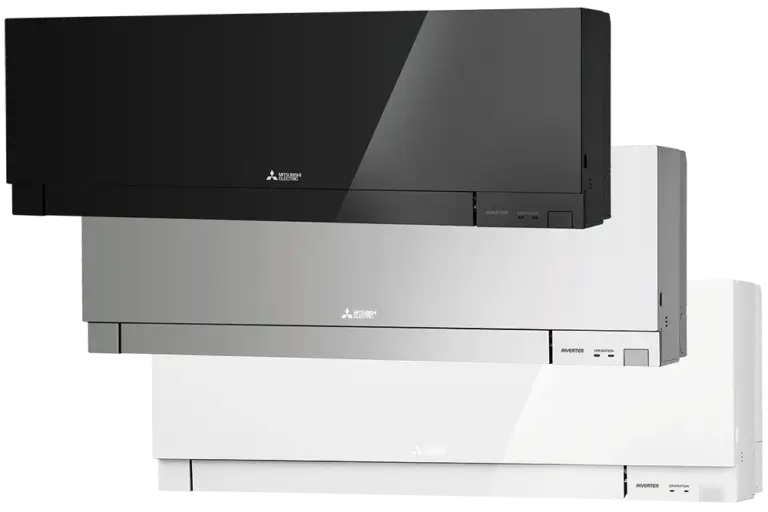
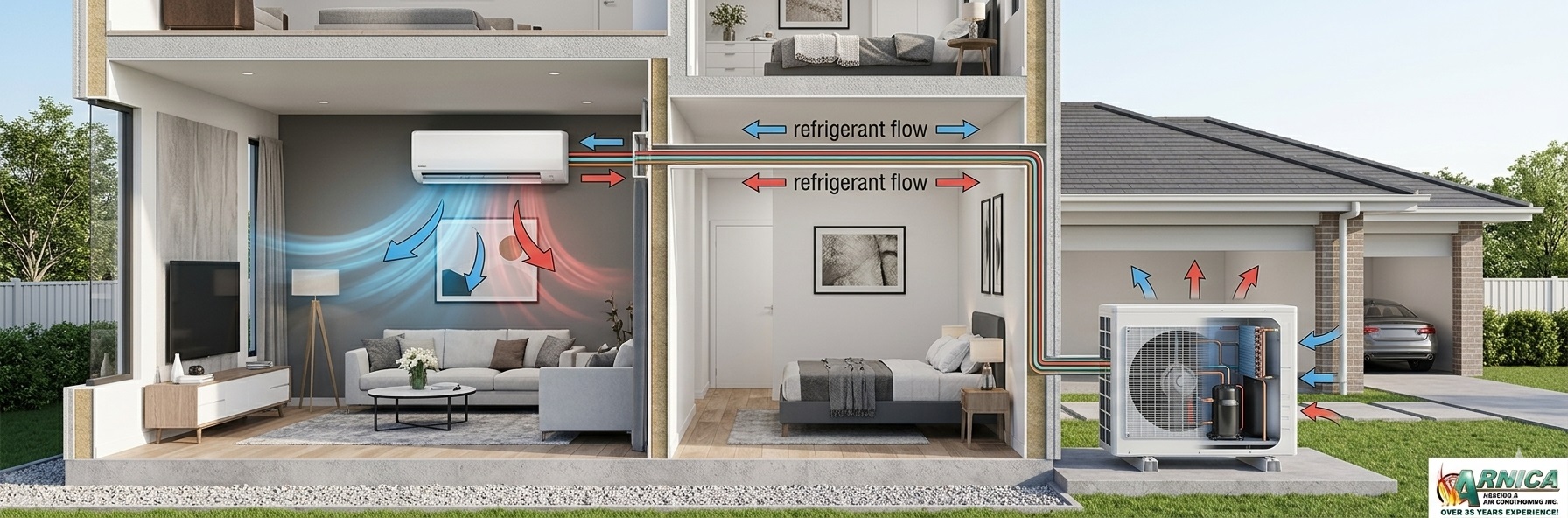
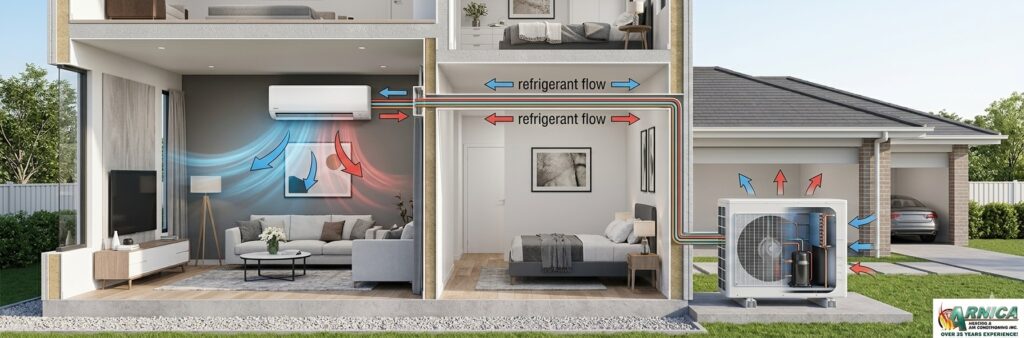
At first glance, ductless mini-splits look simple. There’s an outdoor unit and one or more indoor units mounted on walls or ceilings.
Behind the scenes, though, there’s a pretty clever refrigeration process happening nonstop.
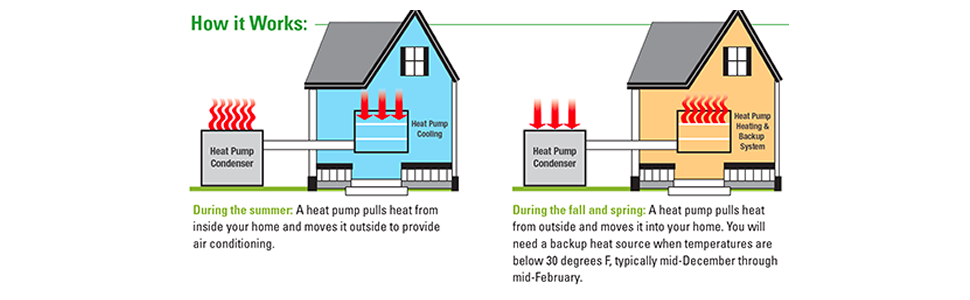
The Refrigeration Cycle Simplified
Here’s how the cooling cycle works in plain English.
The refrigerant inside the system absorbs indoor heat first. That heat gets transferred through refrigerant lines to the outdoor unit. The compressor then pressurizes the refrigerant into a high-pressure gas.
From there:
- Heat gets released outdoors
- The refrigerant cools down
- It changes into liquid form
- The cycle repeats again and again
The indoor blower pushes cooled air back into the room while the heat gets dumped outside.
Simple idea. Extremely effective.
Modern mini-splits also run differently than older AC systems. Instead of constantly turning on and off like traditional systems, they run steadily at lower power levels.
That matters more than people think.
Frequent start-stop cycles burn extra electricity. Continuous low-speed operation saves energy while keeping temperatures more stable.
No big temperature swings. No sudden blasts of freezing air.
Just steady comfort.
Key Difference From Traditional Central AC Systems
Traditional central AC systems rely heavily on ductwork. And ductwork leaks. A lot.
In older New York properties, duct losses can seriously hurt efficiency. Cool air escapes before it even reaches the rooms people are trying to cool.
Mini-splits skip that entire issue.
They deliver conditioned air directly into the room where the indoor unit is installed. No long air pathways. No hidden leaks behind walls.
That’s a major reason why many homeowners dealing with recurring air conditioner service calls are switching over instead of repairing old systems again and again.
What’s New in 2026: Smart Technology Behind Modern Mini-Splits
Mini-splits today are smarter than ever. This isn’t just “cold air from a box” anymore.
The newer systems practically learn how people live.
AI-Based Climate Control & Learning Systems
Many premium mini-splits now track cooling habits and occupancy patterns.
Over time, the system learns:
- When rooms are usually occupied
- Preferred temperature settings
- Peak usage hours
- Sleep schedules
Then it adjusts automatically.
That means less wasted cooling and better efficiency without constantly touching the thermostat.
Smart Sensors & Motion Detection
Some systems use occupancy sensors to detect movement in a room.
If nobody’s there, the system scales back energy usage automatically. Similarly, when someone walks back in, cooling starts again.
That feature alone can shave noticeable money off utility bills.
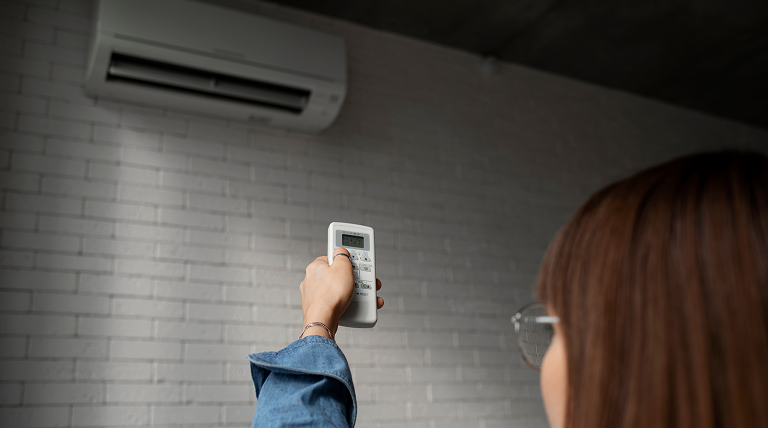
App-Based Remote Control & Automation
This part has become a huge selling point in New York.
People can now:
- Adjust temperatures remotely
- Create schedules
- Monitor energy usage
- Control zones individually
- Turn systems on before arriving home
Everything happens through a phone app.
No more racing home to a boiling apartment.

Components of a Ductless Mini-Split System
Mini-splits may look sleek, but several important components work together inside the system.
Outdoor Unit (Compressor + Condenser)
The outdoor unit houses:
- Compressor
- Condensing coil
- Fan
The compressor acts like the heart of the system. It converts low-pressure gas into high-pressure gas.
Meanwhile, the condenser releases heat outdoors.
Placement matters a lot in New York buildings. Rooftops, balconies, side walls, and tight alley spaces all affect airflow and efficiency.
Poor placement can reduce performance fast.
Indoor Unit (Air Handler + Evaporator)
Indoor units contain:
- Fan
- Evaporator coil
- Air handler
These units come in different styles:
- Wall-mounted
- Ceiling cassette
- Concealed ducted units
Each indoor unit cools the room where it’s installed. That direct cooling approach creates much more consistent comfort.
Refrigerant Lines & Electrical Connections
Instead of major duct installation, mini-splits use small refrigerant lines and wiring connections.
That means:
- Minimal drilling
- Faster installation
- Less property disruption
- Lower labor costs
For many New York apartments, that’s a game changer.
Multi-Zone vs Single-Zone Setup
Single-zone systems cool one room.
Multi-zone systems connect several indoor units to one outdoor condenser.
That setup works especially well for:
- Brownstones
- Duplexes
- Multi-floor homes
- Apartments with uneven temperatures
How Zoned Cooling Solves New York’s Biggest Comfort Problems
One room freezing. Another room boiling.
That’s pretty common in older NYC properties.
Mini-splits fix that problem through zoned cooling.
Each indoor unit operates independently. Family members can choose different temperatures in different rooms.
No thermostat wars.
And because only occupied rooms get cooled, electricity usage drops too.
That’s huge in a city where summer utility bills keep climbing.
Energy Efficiency: Why Ductless Systems Use Less Power
Mini-splits earn their reputation mainly because of efficiency.
Inverter Technology Explained
Traditional systems operate like a light switch:
ON. OFF. ON. OFF.
Mini-splits use inverter technology instead.
The compressor adjusts speed continuously based on cooling demand.
P∝vP \propto vP∝v
Lower compressor speed means lower power consumption.
The system only uses the energy it actually needs.
Reduced Energy Loss Compared to Duct Systems
Duct systems lose energy through:
- Leaks
- Poor insulation
- Dirty ductwork
- Long airflow paths
Mini-splits avoid nearly all of those losses.
That alone improves efficiency significantly.
Real NY Energy Savings Comparison
Compared to older window units and aging central systems, many homeowners notice:
- Lower monthly utility bills
- Faster cooling
- More consistent comfort
- Reduced maintenance costs
Window units especially struggle during brutal New York heat waves.
Mini-splits handle those conditions far better.
Common Mistakes New Yorkers Make With Mini-Split Systems
Not every installation goes smoothly.
People often run into trouble because of avoidable mistakes.
Incorrect System Sizing
Oversized systems short-cycle constantly.
Undersized systems run nonstop and struggle to cool properly.
Proper load calculations matter. A lot.
Poor Indoor Unit Placement
Bad placement creates:
- Uneven airflow
- Hot spots
- Weak circulation
- Reduced efficiency
Indoor units should never be installed randomly just because the wall looks convenient.
Choosing Cheap Installers Over Certified Experts
This one backfires all the time.
Poor refrigerant charging, sloppy wiring, weak drainage setups, and incorrect mounting can wreck system performance.
Cheap installations often lead to expensive repairs later.
Ignoring Maintenance Requirements
Mini-splits still need maintenance.
Dirty filters reduce airflow and force the system to work harder.
That drives up energy usage and shortens equipment lifespan.
Maintenance & Performance Optimization
Mini-splits are relatively low maintenance, but ignoring upkeep is asking for trouble.
Filter Cleaning and Air Quality Impact
Dirty filters affect:
- Cooling performance
- Air quality
- Energy efficiency
- Indoor airflow
Cleaning filters regularly helps the system breathe properly.
Smart Alerts & Self-Diagnostics
Many 2026 systems now include self-diagnostic technology.
The system can alert homeowners about:
- Filter issues
- Refrigerant problems
- Sensor malfunctions
- Drainage concerns
That helps catch issues before they snowball into major repairs.
Seasonal Maintenance Checklist for NY Climate
Before summer starts, homeowners should:
- Clean filters
- Check outdoor airflow clearance
- Inspect drainage lines
- Schedule professional inspections
- Test smart controls
Preventive maintenance almost always costs less than emergency repairs.
Ductless vs Central AC vs Window Units: What NY Users Prefer Now
New Yorkers are leaning heavily toward mini-splits for good reason.
Cost Comparison
Window units cost less upfront but usually cost more to operate long-term.
Central AC installations in older buildings can become incredibly expensive due to ductwork modifications.
Mini-splits often land in the middle:
- Moderate installation cost
- Lower operating expenses
- Better long-term efficiency
Noise Levels & Comfort Differences
Window units are loud. Everybody knows it.
Traditional central systems can also create noisy airflow through ducts.
Mini-splits run much quieter. That’s a huge perk in compact apartments where noise gets annoying fast.
Best Choice by Property Type
Mini-splits work especially well for:
- Apartments
- Brownstones
- Renovations
- Older homes
- Small commercial spaces
Central AC may still make sense for some larger homes already equipped with modern duct systems.
Future of Cooling in New York
New York is moving toward electrification and smarter energy usage.
Mini-splits fit perfectly into that shift.
They reduce carbon emissions, improve energy efficiency, and integrate easily with smart homes.
Landlords are also installing them more frequently because renters now expect efficient cooling options.
And with energy monitoring becoming more common, homeowners are paying closer attention to exactly where their electricity money goes.
Mini-splits help keep those numbers under control.
Do ductless mini-split systems use a lot of electricity?
Not usually. In fact, most modern mini-splits use less electricity than older central systems and window units because of inverter technology and zoned cooling features.
Are ductless mini-splits really better than window AC units in New York apartments?
For most apartments, yes. They’re quieter, more energy-efficient, provide stronger cooling, and don’t block windows or create the same vibration and noise issues.
Final Takeaway: Is a Ductless Mini-Split Right for Your New York Property?
For many New Yorkers, the answer is becoming pretty clear.
Ductless mini-splits offer smarter cooling, lower energy waste, quieter performance, and room-by-room comfort that older systems struggle to match. Whether someone owns a brownstone, condo, apartment, or renovated townhouse, these systems give far more control without the headaches tied to bulky ductwork and aging central AC systems.
As cooling costs keep climbing, more property owners are deciding it makes more sense to upgrade than keep pouring money into outdated systems.