Why New York Homes Are Rapidly Switching to Ductless Mini-Splits
There is a quiet but steady shift happening across New York homes. People are reconsidering the level of comfort they crave for. Oddly enough, it is not just about cooling anymore.
Rising energy costs in places like New York City have nudged homeowners into reconsidering traditional HVAC systems. Older apartments, brownstones, and high-rises were never really built with modern ductwork in mind. Retrofitting them requires opening up walls just to chase comfort. That is not always practical.
Well, the demand is no longer just for cooling or heating. It is for control. These days, people prefer zoned comfort, quiet operation, more precisely, systems that adjust without constant human input.
Ductless mini-splits have quietly stepped into that gap. Not as a trend, but as a solution that fits the rhythm of how people actually live.
What Makes Trane–Mitsubishi Ductless Systems Different?
There is something worth pausing on here. Not all mini-splits are built the same.
The collaboration between Trane and Mitsubishi Electric brought together two very different engineering philosophies. One rooted in American HVAC legacy, the other in precision-driven Japanese innovation.
That combination shows up in subtle ways:
- Systems that do not panic under extreme temperatures
- Units that stay relatively quiet even in compact apartments
- Performance that holds steady in both humid summers and sharp winters
Importantly, homeowners in dense urban setups often prefer hybrid collaborations like this. It feels less like a single-brand gamble and more like layered reliability.
And in a city where space is tight and noise travels through walls, that matters more than brochures admit.
Latest Technology Upgrades in Trane–Mitsubishi Mini-Splits
Technology in HVAC used to feel… mechanical. Switch on, switch off. Done.
Not anymore.
Modern Trane–Mitsubishi systems are leaning into adaptive intelligence. Not flashy AI in a marketing sense, but small behavioral shifts that add up.
- Systems learn occupancy patterns over time
- Temperature adjustments happen gradually, not abruptly
- Energy spikes are reduced through inverter-driven modulation
Here is where people tend to notice the difference. The room just feels right, without constant tweaking.
Some features worth noting:
- Smart app integration for remote control
- Multi-stage filtration for urban air quality
- Continuous operation instead of energy-draining start-stop cycles
On paper, it sounds technical. In real life, it just means fewer moments of discomfort.

How Ductless Mini-Splits Solve NY’s Biggest HVAC Problems
Are you bothered with uneven heating and cooling in certain parts of your home? Is it too costly to add ductwork right now? Don’t worry. There are options worth considering.
With a Trane-Mitsubishi mini-split HVAC system, individual rooms can be controlled separately. The benefits and features of ductless systems have been evaluated across real living scenarios, not just lab settings.
Some everyday problems these systems quietly solve:
- Uneven temperatures between rooms
- Older buildings with no ductwork
- High monthly utility bills
- Limited installation space
And yes, this part often gets overlooked. Installation does not require tearing through walls the way central systems do. That alone changes the conversation for many apartment owners.
Understanding SEER2 and HSPF2 Ratings
Efficiency ratings can feel like alphabet soup at first glance.
But they do matter.
Earlier systems relied on SEER and HSPF. Now, updated standards like SEER2 and HSPF2 provide a more realistic measure of performance under real-world conditions.
- SEER2 reflects cooling efficiency
- HSPF2 reflects heating efficiency
Higher numbers generally mean better energy performance.
The goal is not to chase the highest number blindly. It is to find a balance where efficiency aligns with actual usage patterns.
Product Line Breakdown: Choosing the Right System
Not every home needs the same setup. That is where many buyers go wrong.
Here is a more grounded way to think about it:
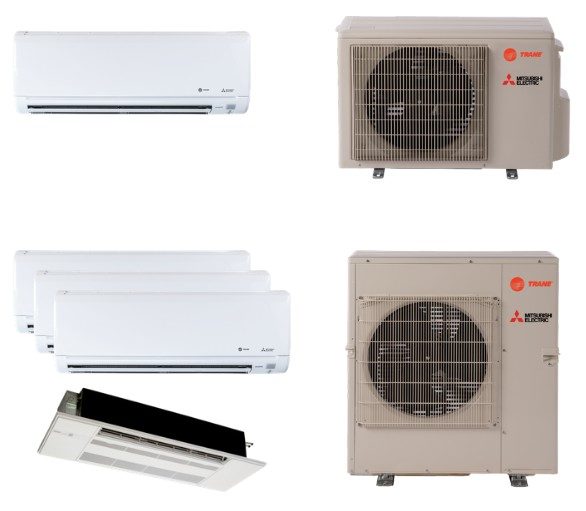
Single-zone systems
Ideal for studio apartments or single-room upgrades
Multi-zone systems
Suitable for multi-room homes needing independent control
Hyper-heating systems
Built for colder climates where winter performance matters
Light commercial setups
Designed for small offices or mixed-use spaces
Interestingly, many homeowners start with one zone and expand later. It is not always an all-or-nothing decision.
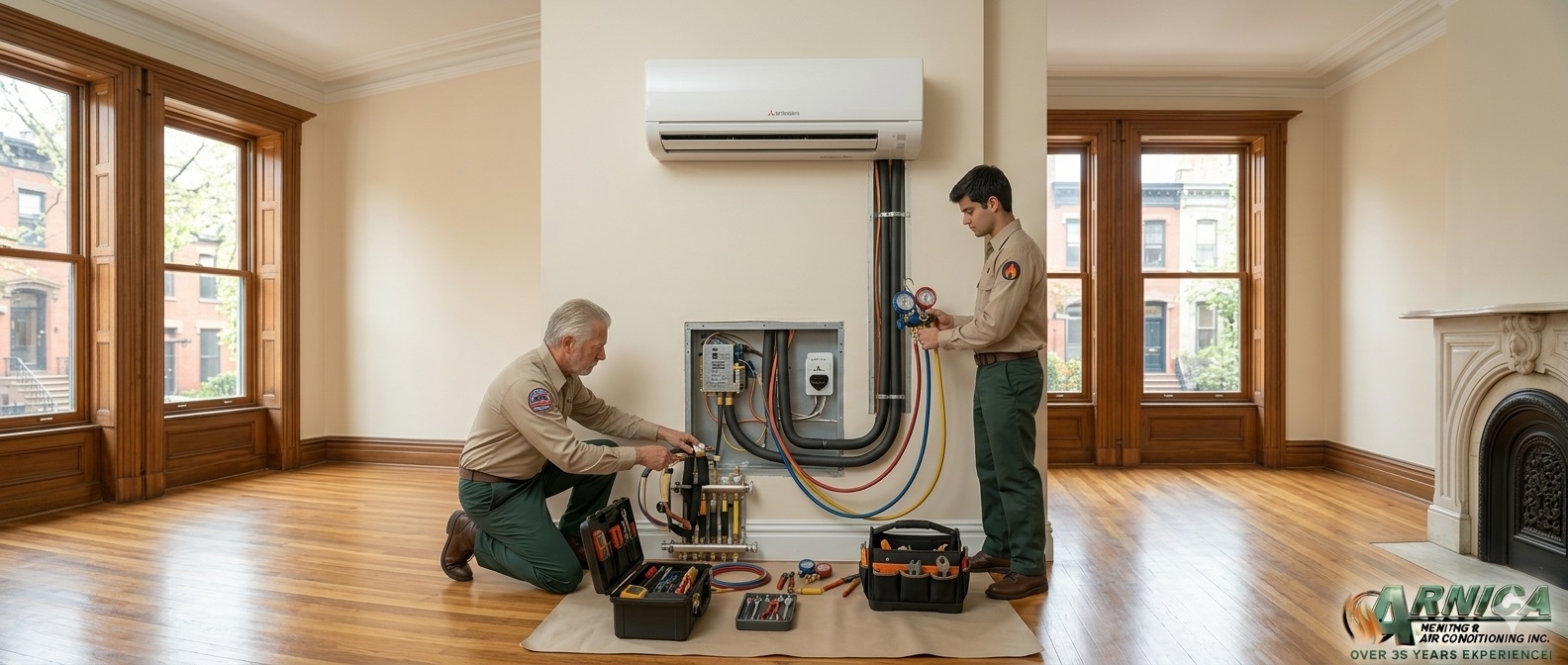
Installation Considerations in New York Homes
Installation is where theory meets reality.
In high-rise buildings, especially in areas like Manhattan or Queens, things can get complicated.
- Electrical capacity needs to be checked
- Outdoor unit placement may be restricted
- Building approvals might be required
This is not the place to cut corners.
Professional installation is not just about getting the system running. It directly impacts efficiency, lifespan, and noise levels.
Cost vs Long-Term Savings: Is It Worth It in NY?
Let’s be honest. Initial costs can feel steep.
But here is the part many overlook. Long-term savings tend to balance things out.
- Lower monthly energy bills
- Reduced maintenance compared to ducted systems
- Potential rebates for energy-efficient installations
Return on investment usually plays out over a few years, not instantly.
For landlords, it often becomes a value-add feature. For homeowners, it becomes a comfort upgrade that pays back gradually.
Common Problems and Troubleshooting
No system is perfect.
Some issues that occasionally come up:
- Smart sensor glitches
- App connectivity hiccups
- Refrigerant imbalances
- Airflow restrictions due to clogged filters
Most of these are manageable.
The key is knowing when to step in and when to call professionals for ductless AC repair, especially in dense areas like Staten Island.
Maintenance Tips to Maximize Performance
Maintenance does not need to feel like a chore.
A few habits go a long way:
- Clean filters regularly
- Pay attention to system alerts
- Schedule seasonal check-ups
Oddly enough, systems that are lightly maintained tend to fail at the worst possible times. Usually during peak summer or winter.
Consistency matters more than intensity here.
Ductless vs Central AC vs Window Units
Installation:
- Ductless Mini-Split – Moderate
- Central AC – Complex
- Window Units – Easy
Energy Efficiency:
- Ductless Mini-Split – High
- Central AC – Moderate
- Window Units – Low
Zoning:
- Ductless Mini-Split – Yes
- Central AC – Limited
- Window Units – No
Noise Level:
- Ductless Mini-Split – Low
- Central AC – Moderate
- Window Units – High
Space Requirement:
- Ductless Mini-Split – Minimal
- Central AC – High
- Window Units – Visible unit
Long-Term Cost:
- Ductless Mini-Split – Lower
- Central AC – Moderate
- Window Units – Higher over time
Quick Decision Guide
- Apartment → Single-zone system
- Multi-room home → Multi-zone system
- Cold climate → Hyper-heating system
Simple, but surprisingly effective.
Are Ductless Mini-Splits the Future of HVAC in NY?
There is a broader shift happening.
Electrification. Energy efficiency. Smarter living systems.
Ductless mini-splits align well with these changes. They are not perfect, but they are adaptable. And adaptability tends to win in cities that never really stand still.
Are ductless mini-splits good for NY apartments?
Yes, especially where ductwork is not feasible. They offer flexibility without major structural changes.
Are they worth it compared to window AC units?
In most cases, yes. They are quieter, more efficient, and provide both heating and cooling.
Do they work in extreme winters?
Hyper-heating models are specifically designed for colder climates and perform reliably.
How long do they last?
With proper maintenance, many systems last 15 to 20 years.
Integrated Perspective: Features and Practical Benefits
Since 1885, when James Trane introduced low-pressure heating systems, innovation has shaped the HVAC industry. The ductless mini-split concept, introduced by Mitsubishi in 1959, took time to gain traction in the U.S.
The 2018 collaboration refined these ideas into something more practical.
A ductless system typically includes:
- One outdoor unit
- One or more indoor units
- Refrigerant lines connecting them
It does require more setup than a window unit. But the payoff shows in performance.
Features that stand out:
- Adaptability to different room needs
- Precise temperature control
- Quiet operation
- Advanced filtration
- Longer warranties
And importantly, inverter technology allows smoother temperature regulation. Not abrupt, not wasteful. Just steady.
Final Thoughts: Should You Upgrade?
The answer is not one-size-fits-all.
For homes without ductwork, the upgrade often makes sense. For those chasing lower energy bills and better comfort control, it becomes even more compelling.
But it still requires thoughtful installation and regular care.
Ductless systems are not just upgrades. They reflect a shift in how comfort is defined. Flexible, efficient, and quietly intelligent. For many New York homes, they solve problems that older systems never quite managed.