
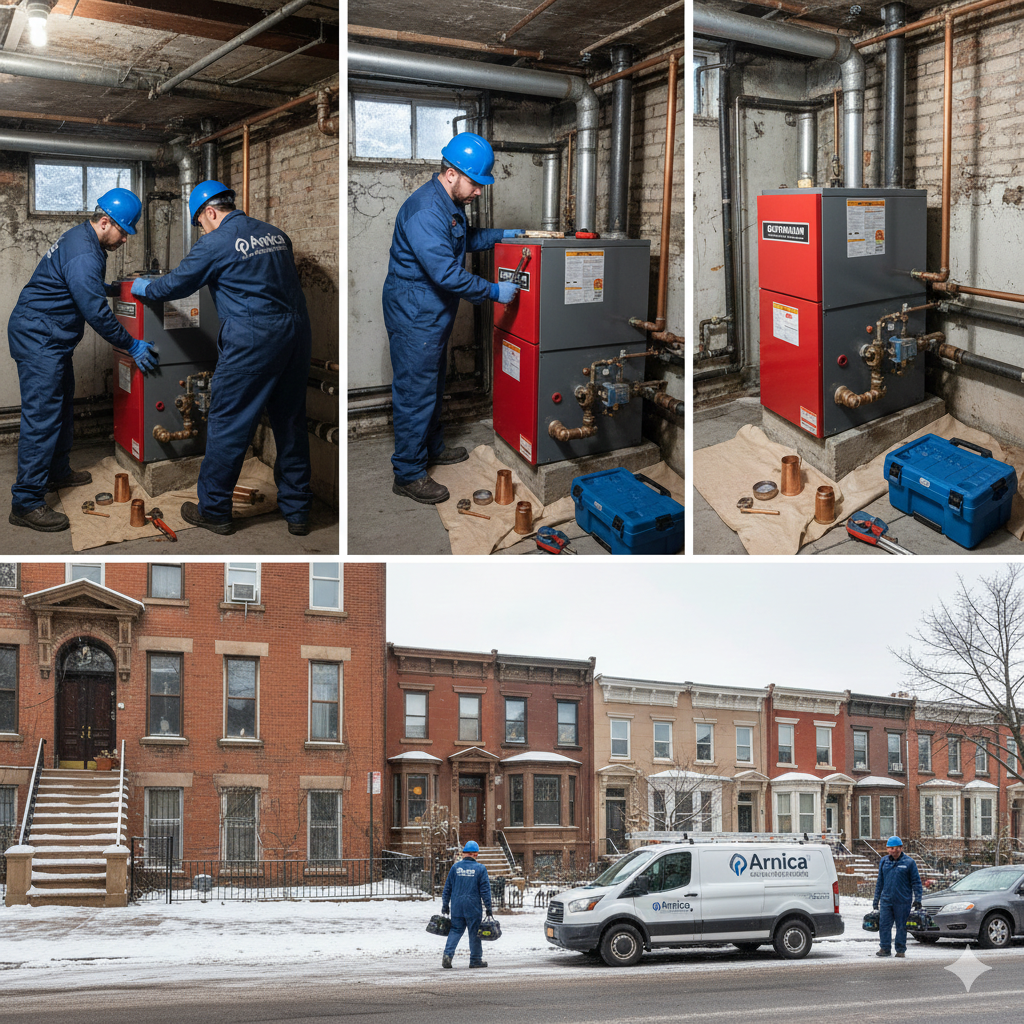
As winter rolls around in Brooklyn, homeowners understand how vital a dependable, energy-saving heating system is, especially in historic areas with old brownstones and pre-war buildings. Many people are looking for systems that offer modern performance and the toughness needed to weather New York’s cold spells. Burnham Hydronics boilers fit the bill. Known for their efficiency, longevity, and rock-solid design, they are a go-to system for boiler installation in Brooklyn every winter.
This guide explains why Burnham Hydronics boilers are well-suited for Brooklyn homes, how they compare to the heating needs of older buildings, what to look for during installation, and how to choose the right system size for your property.
Heating Challenges in Brooklyn Brownstones
Brooklyn neighborhoods like Park Slope, Carroll Gardens, Fort Greene, and Bedford-Stuyvesant are famous for their brownstones, which often require exceptional heating. Most of these buildings are over a century old and were initially built for steam or hydronic heating, so you need a system that plays nice with the old infrastructure.
Common heating challenges in Brooklyn brownstones:
- Thick walls that hold onto heat but take longer to warm up.
- High ceilings mean there is a lot of space to heat.
- Large radiators that demand a steady supply of hot water or steam.
- Old piping that needs a compatible boiler to hook up with.
- Multiple floors call for consistent heat flow.
- Poor insulation in many older buildings drives up heating requirements.
Since brownstones vary widely in layout and age, homeowners need a boiler that can withstand constant winter use. Burnham Hydronics models are well-suited to these demands, making them a no-brainer for older homes that need reliable performance.
Benefits of Burnham Hydronics Boiler Systems
Burnham (now part of U.S. Boiler Company) has a stellar reputation for making boilers that perform flawlessly in Northeast climates. Their Hydronics line has several key features that make it just the ticket for Brooklyn homes.
Best-in-Class Energy Efficiency
Burnham boilers come in both robust cast-iron and highly efficient condensing models. Many units have AFUE ratings above 90%, meaning homeowners can save a bundle on energy while keeping their homes evenly heated.
Built to Take on Harsh Winters
Brooklyn winters might not be the absolute coldest, but they are long and humid with frequent cold snaps. Burnham Hydronics boilers are designed to be dependable in these frigid conditions, resisting heat loss and keeping water temperatures right on the money.
Compact Designs for Tight Basements
Older Brooklyn homes often have basements with low ceilings and narrow entrances. Burnham units are known for their small footprint, making them much easier to squeeze into tight spaces.
Long Haul Reliability and Durability
With cast-iron construction and rust-resistant materials, many Burnham boilers can go the distance, lasting 20–30 years with proper maintenance. In brownstones, where heating systems work overtime, durability is essential.
Seamlessly Works With Existing Radiators
Burnham Hydronics systems mesh well with:
- Cast-iron radiators
- Baseboard radiators
- Old steam systems (with specific models)
- Hydronic setups with multiple zones
This convenience makes them a sure bet for older buildings due for an upgrade.
Burnham Hydronics Boilers Installation Process and Time Frames
Homeowners often ask about how long a boiler installation takes in Brooklyn. While each case is different, installing Burnham Hydronics systems typically goes according to plan.
Initial Assessment (1–2 hours)
A technician will check out:
- Radiators
- Current boiler
- Basement layout
- Piping
- Chimney/Venting
- Heating needs
This assessment ensures they pinpoint the right size and model.
Removal of the Old Boiler (3–6 hours)
Old boilers and huge steam models might require extra work to break down safely.
Installing the Burnham Boiler (6–12 hours)
The time will come down to:
- Boiler type (steam, hot water, or condensing)
- Venting requirements
- Basement access
- Piping updates
- Circulator pump or zone valve setups
System Testing and Start-up (1–3 hours)
Technicians will look for:
- Correct water pressure
- Air in the lines
- Proper fuel combustion
- Even heat distribution
- Safety shut-offs
Total Project Time
Most standard installations can be wrapped up in one day, though complex brownstone upgrades might stretch into a second day.
How to Size a Boiler for Older Buildings
Choosing the right size is crucial, especially in Brooklyn brownstones, where heating needs fluctuate significantly. A boiler that’s too small will run constantly without adequately heating the space; one that’s too big will cycle on and off too frequently and chew up energy.
Key factors to keep in mind when sizing:
- Home size
- Radiator type
- Insulation quality
- Number of floors
- Ceiling height
- Window type
- Current system specifications
- Overall heating load
Professionals use a Manual J calculation to size BTU requirements accurately. Burnham Hydronics boilers come through in many sizes, fitting the bill for both small homes and sprawling brownstones.
Do Burnham Boilers Hold Up in Cold Climates?
The short answer is yes—Burnham boilers are top-notch for cold climates. They maintain steady water temperatures even when the outside temperature plummets. Features that help them power through winter include:
- Cast-iron heat exchangers that hang onto heat longer
- Optimal fuel consumption
- Smart controls that adjust to temperature shifts
- Low heat loss, which amps up heat retention
Burnham Hydronics boilers are a common sight in the Northeast and Midwest, areas with harsh winters, which is a testament to their reliability.
What Size Boiler Do I Need for My Home?
Keep in mind that while every building needs to be checked by a professional to determine its exact heating needs, here are some general rules of thumb for boiler size: a home of 1,000 to 1,500 square feet often needs a boiler with 45,000 to 90,000 BTU. A slightly larger home, around 1,500-2,000 square feet, usually requires a 90,000–125,000 BTU boiler. Buildings measuring 2,000-2,500 square feet commonly use a unit with 125,000–150,000 BTU. Significant places or properties tipping the scales at over 3,000 square feet often call for a system of 150,000 BTU or bigger to get the job done and heat them well.
Brownstones often call for more heating capacity because of:
- Building age
- Radiator size
- Drafty windows
- Thick walls
- High ceilings
A professional heat-loss calculation is highly recommended before you settle on a Burnham Hydronics model.
How long does a Burnham Hydronics boiler stick around?
Burnham boilers are built for the long haul. With proper maintenance, such as annual tune-ups and inspections, they can last 20 to 30 years. Cast-iron models tend to last the longest because they fend off rust and heat-related stress. This property makes them a shoo-in for Brooklyn brownstones that demand heavy winter heating.
Do Burnham boilers require a chimney?
Some do, but not all. Traditional Burnham boilers rely on a chimney. Many high-efficiency Burnham Hydronics condensing units use direct venting, which means they can vent through PVC piping installed through a wall. This feature makes them a solid option for homes without chimneys or for renovated brownstones.
Is a Burnham boiler truly money-saving?
Yes. Burnham offers highly efficient models with AFUE ratings up to 95%. Even their cast-iron boilers punch above their weight in terms of efficiency thanks to advanced technology and design. For Brooklyn homeowners facing high fuel bills, this can translate into significant savings.
Do Burnham boilers cater to steam and hot-water systems?
Burnham Hydronics makes boilers for both types of systems, which is a massive plus in Brooklyn, where homes might have older steam radiators. Their steam models maintain steady pressure, while hot-water models ensure good flow for multi-zone systems. This facility allows homeowners to upgrade their system without needing to start from scratch on their entire home.
How much does boiler installation in Brooklyn set you back?
Costs hinge on:
- Boiler size and model
- System type (hot water vs. steam)
- Basement accessibility
- Old equipment removal
- Venting updates
- Extra controls
Brooklyn homeowners can expect a Burnham Hydronics installation to come in between $7,000 and $15,000. Steam systems typically cost more due to the specialized labor involved.
How do I know if my boiler is undersized?
Telltale signs include:
- The boiler is running non-stop.
- Unevenly heated rooms
- Radiators that aren’t getting warm
- Short-cycling (turning on and off too quickly)
- High utility bills
- Difficulty maintaining thermostat settings
Older homes take a hit when the sizing is wrong. If these issues pop up, it’s time to check the system and consider a Burnham Hydronics upgrade.
Are Burnham Hydronics boilers on the quiet side?
Yes. Newer Burnham models feature sound-dampening elements that significantly reduce noise, making them a good choice for multi-family homes where mechanical rooms are often near living areas.
Homeowners in Brooklyn looking for a high-quality heating upgrade will find Burnham Hydronics boilers a wise choice. These systems consistently meet the demanding heating needs of Brooklyn brownstones, delivering energy efficiency and reliable warmth. Because of their sturdy construction, flexible setup, and proven performance, Burnham boilers are a leading contender for boiler installation across Brooklyn.

Over 35 years of experienced HVAC engineer and blogger with years of experience writing about various topics related to multiple types of HVAC systems installation, repair, and maintenance. I have been in this industry since my apprenticeship in 1985. Our team emphasizes quality workmanship while ensuring customer satisfaction is our top priority.


Leave a Reply
You must be logged in to post a comment.