
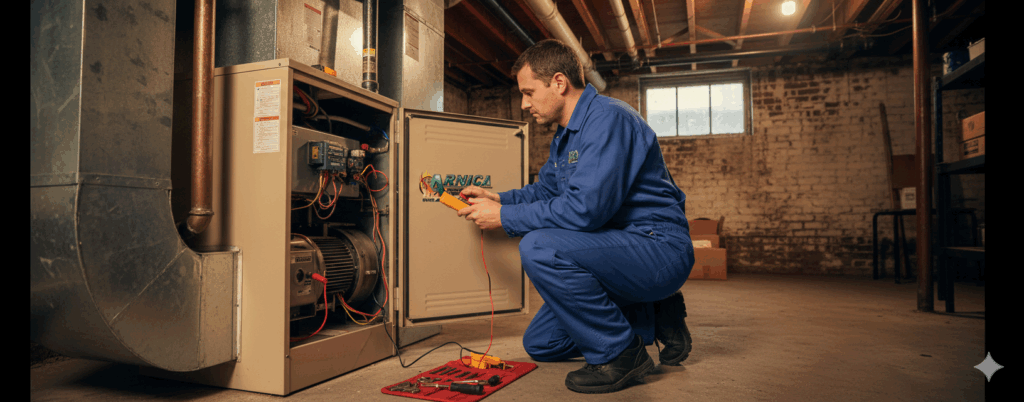
Winter in New York is not mild. It is not forgiving either. Heating system in Brooklyn run long hours, often under strain, sometimes with outdated components hidden behind finished basements and tight utility closets. When failure happens, it rarely comes at a convenient time.
To help you navigate these challenges, this guide covers how systems work, why local conditions create extra stress, how to maintain equipment properly, and what to do when heat disappears in January.
How Central Heating System Works in New York Homes
To understand maintenance, you must first understand the mechanics. Most Brooklyn homes rely on one of three setups:
- Gas-fired boilers (steam or hot water)
- Forced-air furnaces
- Oil-based heating systems in older properties
Each functions differently, but the principle is simple: generate heat, distribute it, and regulate it.
Steam Boilers or Hot Water Boilers
- Heat water using gas or oil.
- Circulate hot water through baseboards or radiators.
- Alternatively, they push steam upward through pipes into radiators.
Steam systems are common in older Brooklyn brownstones. They operate at higher temperatures and pressures; consequently, even minor imbalances—like incorrect pitch in piping—reduce efficiency.
Forced-Air Heating Systems
- Burn fuel inside a heat exchanger.
- Blow heated air through ducts.
- Return cool air for reheating.
Notably, duct leaks, blocked filters, and aging blowers reduce output quickly. There is no magic inside these systems—just combustion, circulation, and mechanical movement. When any one part degrades, the whole chain weakens.
Why Brooklyn Heating Systems Require Extra Maintenance
Beyond general wear and tear, Brooklyn homes face specific geographic and structural challenges:
Older Equipment:
Many buildings still operate 20+ year-old boilers. Some are well-maintained, but many are not. Cast iron sections crack, expansion tanks fail, and pressure valves stick. As a result, repairs increase with age—a pattern seen repeatedly in heating repair in Brooklyn.
Narrow Mechanical Rooms:
Limited ventilation impacts combustion efficiency. Poor airflow around units increases heat stress on components.
Long Heating Seasons:
Heating often runs from late October through early April. Because of this sustained demand, continuous cycles accelerate wear on ignition systems, circulator pumps, blower motors, and thermostats.
Deferred Maintenance Culture:
Some homeowners wait until something breaks. However, that decision tends to cost more later, as emergency service in peak winter is both expensive and slow.
Key Takeaway: Preventive central heating maintenance reduces mid-season breakdowns significantly.
Seasonal Heating Checklist
Routine maintenance is not complicated; rather, it is structured attention before peak demand.
Fall (Pre-Winter) Checklist
- Inspect heat exchanger for cracks
- Clean burners and check ignition system
- Test thermostat calibration and replace air filters
- Inspect flue pipe and chimney draft
- Check pressure relief valve and flush low-water cutoff (steam systems)
- Test carbon monoxide detectors
By taking these steps, you prevent most early winter failures. Skipping this stage increases risk.
Mid-Winter Check
While the system is in heavy use, you should:
- Listen for unusual noises.
- Monitor uneven heating between rooms.
- Check system pressure levels.
- Watch for “short cycling” (turning on and off too frequently).
If the system shuts off repeatedly, service is required. Do not ignore that sign.
Spring Shutdown
- Turn off system safely.
- Clean components and schedule an annual inspection.
- Document performance issues.
Remember, maintenance records matter because they help technicians identify recurring problems faster.
Emergency Response Plan for Winter Failures
Heat failure during freezing temperatures becomes urgent quickly. Pipes freeze and interiors cool fast; therefore, preparation reduces panic.
- Step 1: Confirm the Basics Before calling for heating repair in Brooklyn, check thermostat settings, confirm the circuit breaker position, inspect the gas supply, and replace thermostat batteries. Simple issues sometimes mimic major breakdowns.
- Step 2: Protect Plumbing If heat is out and temperatures drop, open cabinet doors under sinks and allow a small water drip from faucets. Above all, use space heaters cautiously. Frozen pipes often cause more damage than the actual heating repairs.
- Step 3: Call for Professional Service When you call, provide the system type, age of the unit, recent maintenance history, and specific symptoms. Clear communication shortens diagnostic time.
- Step 4: Temporary Measures Use safe, certified electric heaters, but avoid indoor gas burners or ovens for warmth. Carbon monoxide incidents spike during heating failures, so avoid improvisation at all costs.
Long-Term Heating System Care Strategy
Ultimately, emergency repairs cost more than planned service. Long-term care follows a consistent cycle.
- Annual Professional Inspection: At minimum, this should include combustion efficiency testing and safety control verification.
- Replace Air Filters Regularly: For forced-air systems, do this every 1–3 months. Clogged filters strain blowers.
- Upgrade Aging Components: Install programmable thermostats or smart leak detection. Small upgrades extend overall system life.
- Budget Planning: Set aside funds annually to avoid reactive spending.
How to Prepare Heating Systems for NY Winter?
Preparation begins before temperatures drop consistently below 50°F. Schedule your inspection, seal air leaks around doors, and bleed your radiators. Crucially, do not wait for the first cold snap, as service appointments become scarce once temperatures drop.
How Often Should Central Heating Systems Be Serviced?
The general guideline is once per year minimum, or twice for older systems. In addition to scheduled service, call a pro if you notice burning smells, loud banging, or rising energy bills.
Warning Signs That Demand Immediate Attention
Some issues escalate quickly and should never be ignored:
- Water leaking near the boiler.
- Pilot light repeatedly going out.
- Loud knocking in steam pipes.
- Visible soot accumulation or carbon monoxide alarm activation.
These are not minor inconveniences; they indicate mechanical or combustion problems requiring professional intervention.
Heating System Repair vs. Replacement
Not all systems should be repaired indefinitely. It may be time to consider replacement when:
- The unit exceeds 20 years of age.
- Repairs exceed 30–40% of replacement cost.
- Parts are difficult to source.
In the long run, planned replacement avoids mid-winter installation emergencies, which are both disruptive and expensive.
Conclusion
Central heating systems in Brooklyn operate under sustained winter demand, aging infrastructure, and variable weather shifts. Regular central heating maintenance, documented inspections, and emergency planning reduce failure risks and long-term costs while protecting property and occupants.

Over 35 years of experienced HVAC engineer and blogger with years of experience writing about various topics related to multiple types of HVAC systems installation, repair, and maintenance. I have been in this industry since my apprenticeship in 1985. Our team emphasizes quality workmanship while ensuring customer satisfaction is our top priority.


Leave a Reply
You must be logged in to post a comment.