
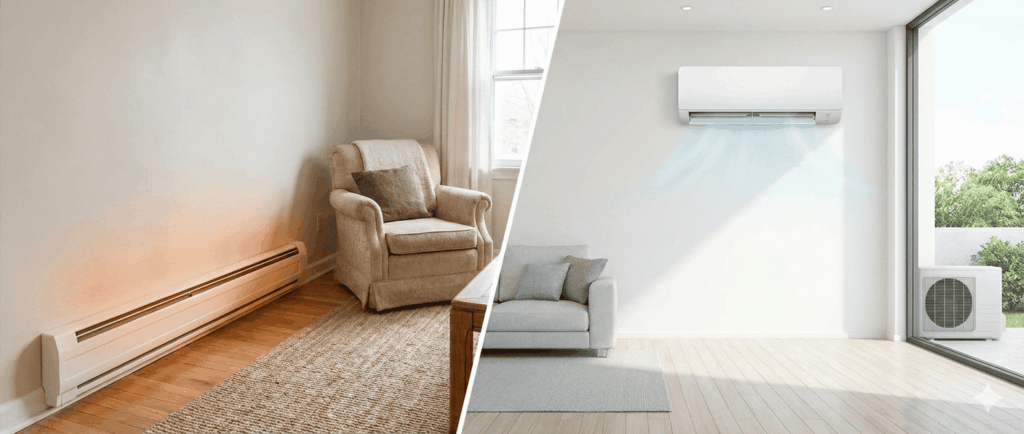
It is impossible to get through the chilling winter without adequate heating at home. New York winters are not for the faint-hearted. Long stretches of freezing temperatures, icy winds, and unpredictable cold snaps place enormous pressure on home heating systems across Brooklyn, Queens, Manhattan, and Staten Island. You now have two different options to choose between heat pumps and electric baseboard heat. Neither of the systems make use of duct work and are perfect for small homes requiring effective heating installation in Brooklyn. At the same time, rising Con Edison electricity bills have forced many homeowners and landlords to rethink how heat is produced, distributed, and paid for.
It might help to compare the two systems carefully in order to obtain the best value of money. Sure, you may be drawn towards the electric baseboard heaters as the unit can be kept hidden by placing it under a window conveniently. Sadly, it comes with a few drawbacks along with the advantages making many consumers settle for ductless heat pumps instead.
The Advantages of Ductless Heat Pumps
You are welcome to choose according to your necessity. However, do read through the benefits of a heat pump before comparing with the base board in order to make the right decision. Here are a few pluses of the pump that happens to encouraging.
- They can be operated remotely with different settings available for different rooms.
- Sure, having the right insulation makes it more effective but the pumps can also work in diverse conditions where the insulation is not optimum.
- The heat pumps are considered to be one of the mot energy efficient heating devices at present.
- There is no odor when you operate the pumps. Instead, you will be pleased to note that the air remains fresh and completely breathable even when the pump remains operational throughout the day and night.
Professional Installation and Safety
The best technicians are pleased to handle heating installation in Staten Island with the help of ductless heating pumps. There is no need to install them near the windows with the professionals often making use of wall mounts to save inadvertent damage to the pricey furniture within the room. However, they can also be placed on the floor and touching the units by accident does not pose any damage to the skin.
Heating Challenges in the Urban Landscape
Urban living presents unique heating challenges. Smaller apartments, attached townhomes, brownstones, and aging buildings often lack ductwork and have insulation that no longer meets modern standards. These realities are prompting New Yorkers to reconsider traditional heating solutions and search for systems that provide comfort without excessive energy consumption.
Why Modern Homeowners are Making the Switch
This shift has sparked a growing comparison between electric baseboard heaters and ductless heat pumps. While baseboards were once a common choice in New York properties, ductless heat pumps are increasingly viewed as a smarter, more efficient alternative that aligns with modern comfort expectations and energy goals.
Why This Comparison Matters More in New York
Heating decisions in New York are rarely simple. Space constraints, building codes, and energy costs all influence which system makes the most sense.
Structural Hurdles in Historic Properties
Small apartments and townhomes dominate much of the housing landscape in Brooklyn and Manhattan. These properties often lack room for bulky systems and require compact, flexible solutions. Older buildings, particularly brownstones and pre-war apartments, may have outdated insulation or structural limitations that make traditional HVAC upgrades difficult.
Rising Energy Costs and Utility Expenses
Another major factor is cost. Con Edison bills continue to climb, making inefficient heating systems increasingly expensive to operate. Electric resistance heating, such as baseboard, converts electricity directly into heat, thereby significantly increasing monthly expenses during peak winter months.
Environmental Regulations and Future Standards
New York’s broader sustainability push also plays a role. Energy efficiency regulations and carbon-reduction initiatives are encouraging homeowners to adopt systems that reduce energy consumption while maintaining indoor comfort. Add to this the growing demand for year-round temperature control, and the appeal of ductless heat pumps becomes even clearer.
Ductless Heat Pumps vs Electric Baseboard Heating: How They Work
What Is a Ductless Heat Pump?
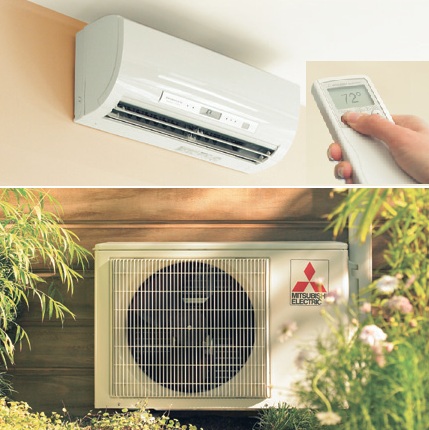
A ductless heat pump is a high-efficiency system that transfers heat rather than generating it. In winter, it extracts heat from the outside air—even in cold temperatures—and moves it indoors. In summer, the process reverses, providing cooling. For New York homes without ductwork, these systems offer a practical and modern solution.
What Is Electric Baseboard Heating?
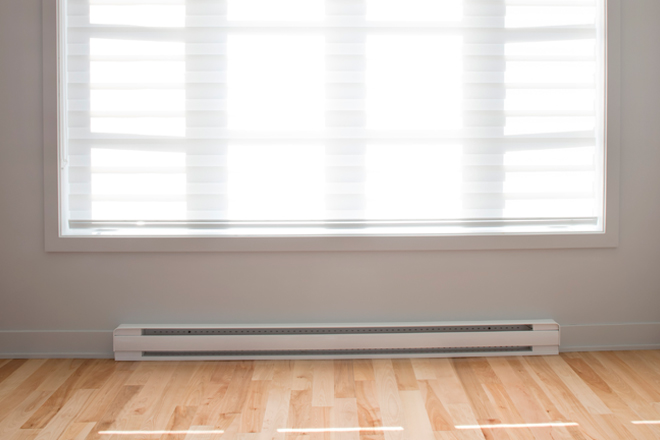
Electric baseboard heaters rely on resistance heating. Electricity passes through a heating element, which warms up and radiates heat into the room. These units are typically installed along walls or beneath windows and operate independently in each room.
Short Comparison Overview
- Efficiency: Heat pumps outperform baseboards by using significantly less electricity.
- Comfort: Heat pumps deliver consistent, evenly distributed warmth.
- Installation: Both avoid ductwork, but heat pumps offer more placement flexibility.
- Operating Cost: Baseboards are cheaper upfront but more expensive to run.
- Safety: Modern heat pumps run cooler to the touch.
- Maintenance: Heat pumps require periodic servicing; baseboards need minimal upkeep.
Benefits of Ductless Heat Pumps for New York Homes
Lower Energy Costs in New York
One of the strongest advantages of ductless heat pumps is their ability to lower energy bills in New York’s demanding climate. Because they move heat rather than create it, they consume far less electricity than electric baseboard systems.
Precision Zoned Comfort
Zoned comfort is another key benefit. Each indoor unit can be controlled independently, making it easy to maintain different temperatures in apartments, duplexes, and townhouses. This is especially valuable in multi-level homes or properties with varying sun exposure.
Seamless Installation for Historic Properties
The absence of ductwork makes heat pumps ideal for older NYC construction. Walls remain intact, and installation is far less invasive than central systems. Additionally, heat pumps handle both heating and cooling, reducing the need for window air conditioners and multiple maintenance schedules.
Improved Air Quality and Quiet Operation
Indoor air quality also improves. There is no burning smell, no dry heat, and no circulation of dust caused by overheated elements. Quiet operation further enhances comfort, a crucial factor in compact New York living spaces where noise travels easily.
When Baseboard Heating Still Works in NY Properties
Despite their drawbacks, electric baseboard heaters still have a place in certain New York properties. Very small rooms, secondary spaces, or areas used infrequently may not justify the investment in a heat pump.
Budget constraints also play a role. For single-room needs or temporary solutions, baseboards offer a low initial cost. In some buildings, installation restrictions or landmark preservation rules may limit options, making baseboards the only viable choice.
Realistic Cost Comparison for NY Residents
Initial installation costs for ductless heat pumps are higher than baseboard heaters. However, monthly running costs tell a different story. Under NY winter conditions, baseboards often result in significantly higher electricity bills.
Maintenance costs for heat pumps include filter cleaning and periodic professional servicing, while baseboards require minimal attention. Over the long term, heat pumps typically deliver lower ownership costs due to energy savings and longer system lifespan.
Rebates and incentives further improve the financial picture. New York State and utility programs often provide incentives for energy-efficient upgrades, helping offset installation expenses.
Which System Fits Better in New York Homes?
Apartments, brownstones, condos, and single-family homes each present different challenges. Wall-mounted heat pump units save floor space, while floor-mounted options blend well in certain layouts. Placement flexibility allows systems to avoid window areas and protect valuable furniture.
Child and pet safety is another consideration. Heat pumps generally operate at lower surface temperatures than baseboards, reducing burn risks in compact homes. Smart thermostat compatibility and remote controls add convenience and efficiency, aligning with modern urban lifestyles.
Which System Performs Better in New York’s Harsh Winters?
Cold-climate heat pumps are designed to operate efficiently even in freezing temperatures. They deliver consistent heat output and respond quickly to temperature changes. Electric baseboards, while reliable, often struggle to maintain even warmth without driving up energy costs.
In terms of reliability, modern heat pumps have proven dependable during New York cold snaps, offering steady comfort without the dramatic spikes in electricity usage associated with resistance heating.
What New Yorkers Are Saying About Ductless Heat Pumps vs Baseboard Heating
Brooklyn residents frequently discuss the shock of winter electricity bills caused by baseboard heating. Queens homeowners often praise the ability to control temperatures room by room. Manhattan apartment dwellers cite comfort complaints and outdated systems as reasons for upgrading, while Staten Island families emphasize long-term energy savings and quieter operation.
Efficiency and Savings: A Guide to Ductless Heat Pumps in New York
Is a ductless heat pump cheaper to run than baseboard heating in New York?
Yes. Heat pumps move heat instead of creating it, so this process uses far less energy. The average cost to run a ductless heat pump can be nearly half that of electric baseboards over a New York winter. Homeowners often see lower bills. Efficiency makes it a smart financial choice for many.
Do ductless heat pumps work well in New York winters?
Yes, modern ductless heat pumps work in New York winters. Advanced models withstand extreme cold and operate in freezing conditions. They provide steady warmth all season. Winter is no longer a major threat to these systems. Take control of your comfort—explore ductless heat pumps this winter.
Is electric baseboard heating outdated?
Baseboard systems are functional but inefficient because they convert electricity directly into heat. Newer technologies, like ductless heat pumps, are more efficient and offer better temperature control. Many residents view baseboard units as outdated due to poor energy efficiency.
How long do ductless heat pumps last?
Ductless heat pumps last up to twenty years. With regular maintenance, these systems remain reliable. They offer excellent value for their initial cost. Invest in a system that will serve you for years—learn more now.
Are ductless heat pumps noisy in small New York apartments?
No, ductless heat pumps are not noisy in small New York apartments. They produce very little sound, much quieter than window air conditioners. Residents enjoy peace and quiet. Silence is a benefit for city living. Experience peaceful warmth—switch to a ductless heat pump today.
How much did your NY electric bill drop after installing a heat pump?
After installing a heat pump, NYC residents see savings on their electric bills. Bills drop during the peak winter season, and lower consumption puts more money in your pocket. Heat pump efficiency pays off quickly. Make the switch and save on your next bill.
Is a ductless heat pump worth it for Brooklyn brownstones?
Yes, a ductless heat pump is worth it for Brooklyn brownstones. These homes often lack space for bulky metal ductwork. Zoning allows for different temperatures on each floor. This flexibility preserves original walls and fits historic homes. Upgrade your brownstone and enjoy efficient, comfortable living—get started today.
Does a ductless heat pump really heat well in freezing NYC weather?
Yes, a ductless heat pump heats well in freezing NYC weather. Cold-climate models excel in sub-zero air and extract heat even from the coldest outdoor environments. Stay cozy despite harsh winters, showing these units’ reliability. Stay warm—discover your ductless heat pump options.
Can landlords in New York upgrade baseboard heaters?
Yes, landlords in New York can upgrade baseboard heaters. They must follow local building codes. Tenant agreements may impact installation timing. Enhanced heating can increase property value. Take the first step to improve your property today.
For New York homeowners navigating harsh winters, rising energy costs, and limited space, the choice between ductless heat pumps and electric baseboard heating carries long-term consequences. While baseboards may still serve specific short-term or low-use needs, ductless heat pumps stand out for their efficiency, comfort, and adaptability to New York living. With lower operating costs, zoning flexibility, and reliable cold-weather performance, ductless heat pumps increasingly represent the smarter, future-ready heating solution for Brooklyn, Queens, Manhattan, and Staten Island homes.

Simone Arnica is the certified and more than 35 years experienced HVAC expert from Arnica Heating and Air Conditioning Inc. suggesting maintenance tips for the HVAC system to protect it from early damage, unwanted maintenance cost and also to save on energy cost. Follow the blog to learn how it can be done easily.


Leave a Reply
You must be logged in to post a comment.