The question “How often should a central AC unit be charged with refrigerant?” is more important now than it has ever been. New rules about refrigerants, old HVAC systems, and the need for more cooling are making homeowners and building managers rethink how to look after their AC.
Even though new environmental rules are pushing people to go with cleaner and more efficient refrigerants, older systems are still common in places like New York. At the same time, central air conditioning systems are taking on more work because summers are getting hotter and cooling seasons are stretching out. The old idea of “just adding more refrigerant” doesn’t cut it anymore because of the ongoing switch to newer refrigerants.
Expert Guidelines on How Often to Charge Central AC Refrigerant
The truth is simple: adding more refrigerant is no longer a normal part of maintenance. It often means you need to watch out.
You shouldn’t have to recharge your central AC refrigerant all the time
Refrigerant works in a closed system, so it’s not the same as fuel. A common mistake is to think that refrigerant runs out like gas. No, it doesn’t.
A central AC system works in a closed loop. Refrigerant moves in a loop, taking in heat from the air inside and dropping it off outside. It should never be completely “used up” under normal conditions. If your system needs refrigerant every year or two, something is messed up.
Why regularly recharging the refrigerant means the system might fail
If you have to top off the charge more than once, it usually means there is a leak. And leaks are not little issues.
- Even small leaks can knock down efficiency by up to 30%.
- When there isn’t enough refrigerant, the compressor has to work double time.
- This can eventually cause the compressor to give out, which is one of the most expensive repairs.
Putting air in a flat tire without fixing the hole is exactly like ignoring this cycle.
New rules for refrigerants that will affect New York systems in 2025 and 2026
There is a big change going down in the HVAC business:
- The amount of older R-410A refrigerant is slowly dying out.
- R-454B and R-32 are now filling in for new systems because they are better for the environment.
- Recharging older units is getting pricey because there isn’t enough refrigerant to go around.
This means that having to juice up your unit often is not only a waste of time, but it is also eating up your budget.
How often should home systems be checked?
For most homes:
- Set up yearly inspections, and try to get them done before summer kicks in.
- Technicians check out the system’s pressure levels, airflow, and overall performance.
- This helps keep away breakdowns when it’s very hot.
We don’t recharge our devices very often, but we do need to keep tabs on them.
Rules for Checking Refrigerants in Business Buildings
Commercial systems need more looking after:
- It is recommended to have inspections every three months.
- Inspections are often needed on big buildings to make sure they stay energy efficient.
- Catching problems early keeps costs down.
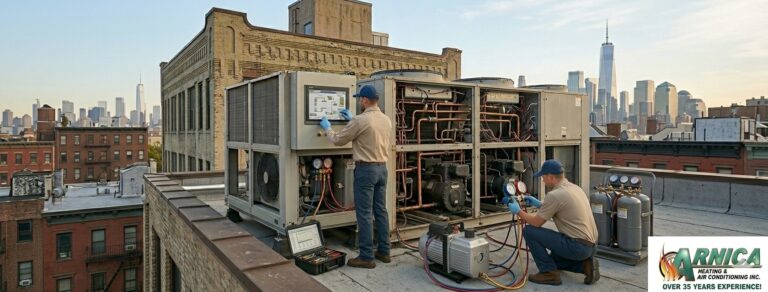
How smart HVAC systems now keep track of refrigerant on their own
Systems are getting smarter these days.
- Sensors built into the system keep an eye on the refrigerant’s pressure.
- Smart thermostats can pick up on problems that make cooling less effective.
- Predictive alerts let users know before a system conks out.
This shift toward automation is making it less necessary to fix things up after they already broke.
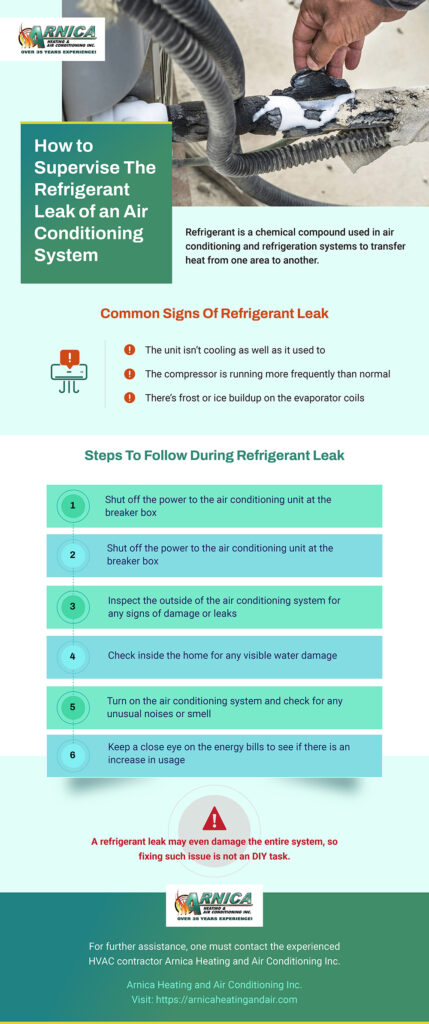
9 Signs That Your Central AC Refrigerant Is Low
If you spot signs of trouble early on, you can steer clear of big repairs:
- Warm air coming from vents even though the thermostat is set right.
- The air conditioner stays on longer but has trouble cooling down.
- Electricity costs shot up unexpectedly.
- Ice building up on refrigerant lines or evaporator coils.
- Hissing or bubbling sounds (a sign of a surefire leak).
- Smart thermostats flagging problems.
- There isn’t much airflow even when the system is running.
- A lot of humidity hanging around inside.
- A lot of starting and stopping (short cycling).
Many modern smart systems can now automatically find these problems, which is a big help for homeowners.
Why Older Buildings Are Having More Refrigerant Leaks
Older buildings, especially those in busy city areas, are more likely to break down.
Infrastructure that is getting old:
Older buildings often have systems that are out of date. Joints give way over time, and small cracks show up.
Environmental Factors and Corrosion:
Air and humidity from the coast make corrosion speed up, especially in metal parts. This wears down the lines that carry refrigerant.
Problems with Setting Up and Using:
Leaks can pop up later if the installation wasn’t done right in the past. Longer cooling seasons, on the other hand, wear out the equipment faster.
Recharging the refrigerant, fixing a leak, or replacing the whole thing
When there are problems with refrigerant, property owners have three choices.
When a simple recharge will do
If you only need to fill it up once, it might work if:
- The system is still pretty new.
- There have been no leaks before now.
- The performance goes back to normal.
When You Need to Fix a Leak
You need to patch up a leak when:
- The levels of refrigerant keep dropping off.
- You can see or hear signs of a leak.
- The cooling performance keeps slipping.
When It’s Better to Get a New AC System Instead of Fixing the Old One
When to go for a replacement:
- The system has been hanging in there for more than 10 to 12 years.
- It uses up too much old refrigerant.
- The cost of repairs keeps piling up.
In a lot of cases, trading in for a newer system can pay off in the long run and make things run smoother.
How predictive HVAC maintenance is changing the way things are done
The industry is moving away from fixing things after they break and toward stopping them from breaking in the first place. Smart HVAC sensors find problems early on. Modern systems can:
- Keep an eye on the pressure levels as they change.
- Find small leaks before they turn into big ones.
- Send out notifications directly to users or technicians.
Benefits of Regular Maintenance:
- Fewer breakdowns in an emergency.
- Cut down on repair costs.
- A longer life for the system.
Property Owners Save Money: It’s much cheaper to deal with a small leak right away than to have to swap out the whole unit or the compressor.
How much does it cost to recharge refrigerant in New York?
The costs of recharging refrigerants are climbing all the time.
Average Costs
In places like Queens, Brooklyn, Staten Island, and Manhattan:
- Residential recharge: moderate to high, depending on the type of refrigerant used.
- Because of the larger amounts, commercial systems cost a arm and a leg.
Reasons Why Prices Are Going Up
- Phasing out old refrigerants.
- Not very available (hard to come by).
- More work and rules to follow through with.
Why fixing leaks costs less: Recharging often can add up quickly. It’s always cheaper to get to the bottom of the main issue.
How to Keep Your AC Running Longer and Stop Losing Refrigerant
It’s always better to head off problems before they happen than to fix them later.
- Yearly Maintenance by Professionals: Regular inspections root out small problems before they blow up.
- Monitoring of Smart Thermostats: Smart systems help track performance and catch problems early on.
- Cleaning the coils and keeping the airflow going: Dirty coils and clogged filters put a strain on the system, which makes it more likely to freeze up and leak.
- Finding leaks early: Fixing small leaks is easier and costs less. The problem only gets worse if you wait.
When to Call a Professional to Fix Your Central Air Conditioning
Signs of Trouble Right Away
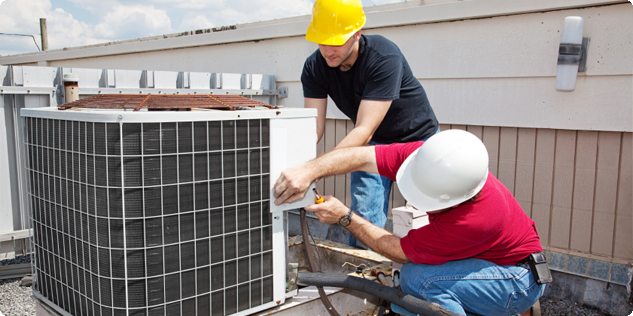
If you run into any of the following, get in touch with a professional:
- Air that is too warm or cooling that won’t work.
- Ice build-up.
- Weird noises like hissing or bubbling.
- Costs of energy spiked unexpectedly.
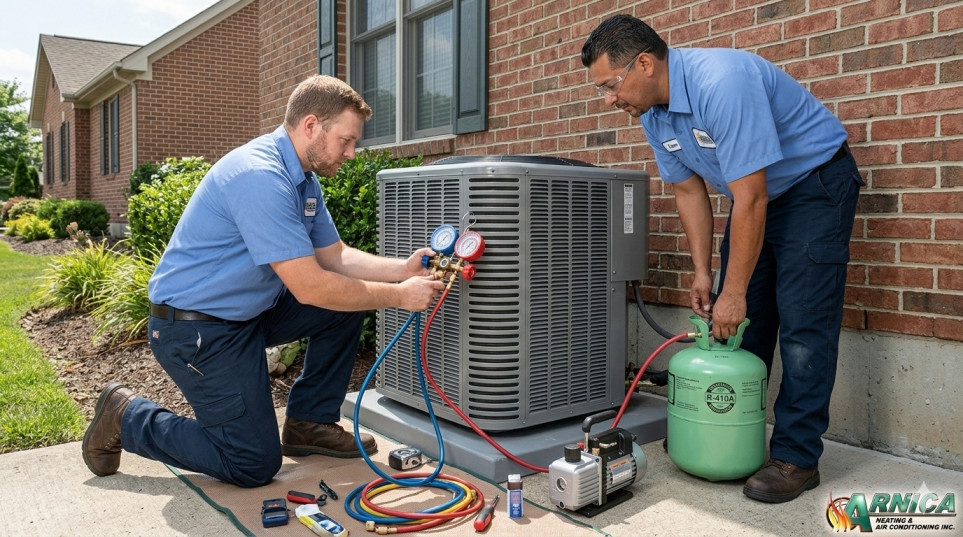
Why You Shouldn’t Try to Recharge Your Refrigerant Yourself
What to do with refrigerant:
- Blocked by law.
- Difficult when it comes to tech stuff.
- Could turn out bad.
Recharges and repairs should only be handled by certified HVAC technicians.
Benefits of Getting Inspections by Professionals
- Spot on diagnosis.
- Dealing with refrigerants the right way.
- Dependability of the system down the road.
Never ignore problems with your refrigerant
Problems with refrigerants aren’t just small; they’re signs that bigger problems are on the way.
- Recharging the refrigerant is not something that needs to be done up on a regular basis.
- Regular recharge notifications mean that the system has bigger problems to work out.
- Tracking down leaks is very important for keeping things running along smoothly for a long time.
- It costs a lot of money to keep up older systems because of changes in the rules.
- Managing equipment with predictive maintenance is getting way smarter.
How often should you add refrigerant to a central air conditioning unit? The truth is that this almost never comes up in normal situations.
If your system needs to be topped off often, it’s not just maintenance; it’s a problem that needs to be sorted out. Because of rising costs, stricter rules, and more advanced HVAC technology, the best course of action is clear: check up on your system often, fix up leaks right away, and switch over to a new unit when necessary. That is how you look out for your comfort and your money.
How to Supervise The Refrigerant Leak of Central AC