A ductless mini-split system in Manhattan doesn’t have an easy life.
Between traffic pollution, tight apartment layouts, coastal moisture, and brutal seasonal swings, these systems put up with conditions that many suburban HVAC units never face. The thing is, treating a Manhattan mini-split like any other ductless system can end up costing homeowners more than they expect.
In many high-rise buildings, simply getting to the equipment is half the battle. Indoor heads are often mounted near windows, while outdoor condensers may be tucked into limited exterior spaces. Technicians frequently have to work around co-op rules, elevator schedules, building access restrictions, and even NYC permit requirements for certain upgrades.
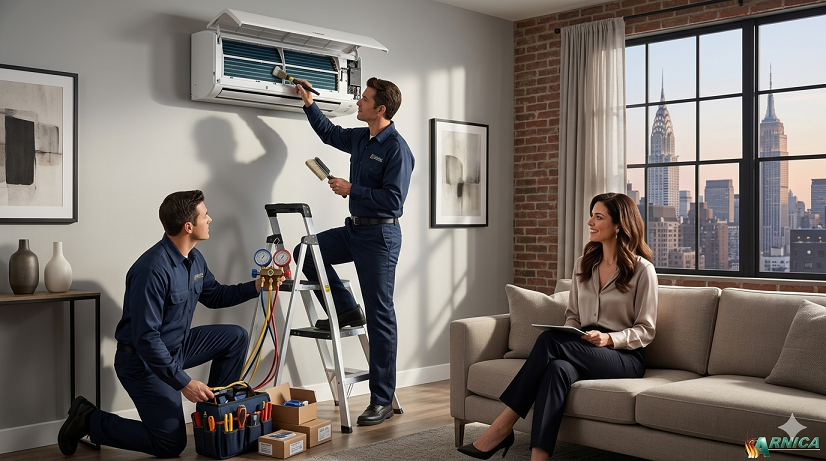
Ductless Mini Split Air Conditioning Maintenance & Repair in Manhattan Home
Older buildings add another wrinkle. Some electrical panels weren’t designed with modern inverter-driven heat pumps in mind, which can lead to circuit capacity concerns that need to be sorted out before bigger issues show up.
The Hidden Cost of “Micro-Climates” and Stack Effect
Manhattan high-rises create severe, localized structural pressures that passive suburban homes never experience. Chief among these is the “stack effect”—a phenomenon where warm air rapidly rises through a building’s vertical shafts, altering air pressure dynamics across different floors. For a mini-split system, this means units on lower floors constantly battle downward drafts and street-level exhaust, while units on upper floors handle intense, rising building heat and concentrated humidity.
Furthermore, urban high-rises suffer from severe structural micro-climates. A mini-split condenser squeezed onto a south-facing brick balcony can experience localized ambient temperatures up to 15°F to 20°F hotter than the actual NYC weather report due to thermal brick heat retention. Without specialized maintenance to calibrate the system’s inverter compressor against these extreme pressure and temperature differentials, the unit will constantly short-cycle. This localized strain accelerates mechanical wear, reducing the standard 15-year lifespan of a premium mini-split by up to 30% to 40% in high-density urban environments.
Urban Air Quality Takes a Toll
Look, Manhattan air isn’t exactly gentle on HVAC equipment.
Fine dust, soot, pollen, and construction debris build up faster than most people realize. Filters clog up sooner. Coils get dirty. Airflow starts dropping off.
Common maintenance concerns include:
- Dirty filters reducing system efficiency
- Cooking odors and smoke affecting indoor air quality
- Mold growth inside drain pans and condensate lines
- Clogged drainage causing unpleasant odors
- Increased need for HEPA or activated carbon filtration
Many apartment owners are surprised by how quickly urban particulates can impact system performance.
The Invisible, Microscopic Pollutant: The Deep-coil Biofilm
An external pollutant may gum up the works of a central air conditioner, but your indoor Manhattan unit is facing an intensely specific air quality crisis. Apartment buildings, as a rule, are small and therefore will never vent high levels of cooking steam, shower steam, or respiration outside and to the outside. As the mini-split’s incredibly tiny evaporator coils are bombarded with these levels of moist air, condensation will be guaranteed.
In New York City, moisture mixes in a hurry with flakes of dead skin cells, kitchen grease, and pet dander to become a sticky organic goo, or bio-film. It is a permanent cement like material which the regular cleaning sprays sold in retail stores can’t even cut through. A study by the United States Environmental Protection Agency (EPA) shows a mere 1/25th-inch accumulation of dust and grime on an HVAC coil can result in a 21% decrease in efficiency.
More alarmingly, dark, moist channels within the deep-coil are the ideal incubation chamber for mold and volatile organic compounds. Regular filter wipes don’t touch the grime on the actual coil; you need a high pressure wash of the deep-coils with a specialty chemical and a clean-out of the condensate lines with an antimicrobial solution before that organic matter can be recirculated throughout your living area, causing musty, toxic odors.
Smart Diagnostics Are Changing the Game
Modern mini-splits are getting smarter.
Many manufacturers now include Wi-Fi-enabled controls and onboard fault diagnostics that allow technicians to monitor refrigerant performance, compressor operation, and fan motor activity remotely.
Predictive maintenance tools can help spot:
- Abnormal compressor loads
- Refrigerant irregularities
- Excessive vibration
- Fan motor performance issues
- Unusual power consumption trends
Instead of waiting for a breakdown, service can be scheduled before a major failure occurs.
Poor Maintenance Hits the Electric Bill
Here’s where things really add up.
Dirty coils and filters force compressors to work harder and run longer. A leaking refrigerant line could stealthily degrade heat pump performance for months before anyone knows what’s wrong. Motors are not working evenly on the fan, the occupants get an uneven temperature, so they crank the thermostats up and the energy use increases again. Eventually the inefficiencies add up to double-digit energy costs and a premature death for the system.
Recommended Maintenance Schedule for NY Conditions
For most Manhattan apartments, annual service should be considered the bare minimum.
Best practice usually includes:
- Spring tune-up before cooling season
- Fall inspection before heating season
- Mid-winter performance check for heat-pump systems
- Monthly filter cleaning or replacement
- Condensate line inspections during humid months
- Outdoor unit clearance checks after storms or snow events
New systems should also receive a six-month follow-up inspection to verify refrigerant charge, controls, and overall operation.
Why Do Mini-Splits Become Noisy?
If a ductless system starts sounding different after a few years, there’s usually a reason.
Potential causes include:
- Dirt accumulation on fan blades
- Loose mounting brackets
- Worn bearings
- Refrigerant charge problems
- Damaged outdoor fan blades
- Inverter or control board faults
- Improper installation that worsens over time
Strange noises rarely fix themselves. Getting them checked out early often prevents a much larger repair bill later.
Manhattan mini-splits have one of the most challenging conditions of operation in the nation. Pollutants, old buildings, code issues and year-round use challenge ductless mini-split systems in Manhattan and demand an experienced maintenance program, intelligent monitoring, and frequent filter service in order to maintain optimal performance, keep energy bills in check and avoid unexpected repairs during times of greatest need.