
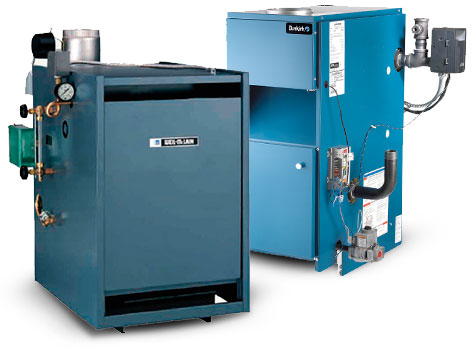
Heating a New York home isn’t just about producing enough heat. It also means controlling fuel consumption, managing operating costs, and getting the most useful heat from an aging or newly installed system. Furnaces heat air and distribute it through ducts, while boilers heat water to produce hot water or steam that travels through radiators, baseboards, or radiant-floor systems.
For property owners considering boiler installation, understanding efficiency ratings is essential. The most commonly used measurement is Annual Fuel Utilization Efficiency, or AFUE. With heating costs remaining a major household expense, that number can help compare equipment, but it shouldn’t be treated as a guarantee of lower utility bills.
Furnace vs. Boiler Efficiency Ratings: What New York Homeowners Should Know
What Is AFUE and What Does the Rating Actually Tell You?
AFUE measures how much of the fuel consumed by a furnace or boiler becomes usable heat over a typical year.
The concept is fairly straightforward:
- 80% AFUE: About 80% of the fuel’s energy becomes heat, while roughly 20% is lost.
- 90% AFUE: About 90% becomes usable heat.
- 95%+ AFUE: Most of the fuel’s energy is converted into heat.
The rating makes it easier to compare heating equipment before purchase. However, AFUE doesn’t measure every loss occurring between the heating appliance and the living space.
For example, a furnace can have a high AFUE rating while heated air escapes through leaky ducts. Similarly, a boiler can have excellent combustion efficiency while poorly insulated piping loses heat before water or steam reaches the radiators.
That distinction matters.
AFUE is an equipment efficiency measurement, not a household energy-bill calculator.
Furnace Efficiency Ratings: What New York Homeowners Should Look For
Standard furnaces often have AFUE ratings around 80%, while high-efficiency models can reach the 90% range and beyond. A higher-rated furnace can reduce fuel waste, particularly when replacing an older, inefficient unit.
Still, the installation environment matters.
Duct leakage can undermine furnace performance, especially when ducts run through attics, garages, crawlspaces, or other unconditioned areas. The source material notes that duct losses can reach substantial levels in these locations, making distribution efficiency just as important as the furnace’s rating.
Airflow also matters. Restricted returns, dirty filters, undersized ducts, and poorly balanced systems can force equipment to work harder. A high-AFUE furnace connected to a struggling duct system won’t deliver its full potential.
Upgrading can make financial sense when an older furnace requires frequent repairs, operates inefficiently, or produces inconsistent comfort. The calculation should include expected repair costs, fuel savings, equipment age, and installation expenses rather than focusing on AFUE alone.
Boiler Efficiency: How AFUE Applies to Steam and Hot-Water Systems
Boilers operate differently from furnaces, and the distribution system becomes particularly important.
Steam boilers heat water until steam travels through piping to radiators. Hot-water boilers circulate heated water through baseboards, radiators, radiant floors, or coils that transfer heat into indoor air.
Steam systems generally operate at higher temperatures and are inherently less efficient than modern hot-water systems. That doesn’t mean every steam system should be replaced. Older New York buildings often rely on steam because the infrastructure was designed around it.
High-efficiency and condensing boiler technology has improved considerably. These systems can capture additional heat from combustion gases, increasing efficiency under suitable operating conditions.
For older properties, piping condition, radiator performance, insulation, controls, and distribution losses can have a major effect on actual performance. A boiler’s AFUE rating doesn’t tell the entire story.
That is particularly relevant when planning boiler installation in Queens, where older homes and multifamily properties can have complicated existing heating infrastructure.
Furnace vs. Boiler: Which Is More Efficient for a New York Home?
There isn’t a universal winner.
| Factor | Furnace | Boiler |
| Energy efficiency | High with efficient equipment and good ducts | High with modern equipment and proper distribution |
| Operating costs | Influenced heavily by fuel and duct losses | Influenced by boiler efficiency and piping losses |
| Comfort | Fast air-based heating | Even, steady radiant-style heating |
| Maintenance | Filters, blower, burners, controls | Water quality, burners, pumps, valves, controls |
| Installation | Requires suitable ductwork | Requires compatible piping and radiators |
| Best suited for | Homes with existing duct systems | Properties with radiator or hydronic systems |
In practice, the building’s existing infrastructure can be more important than the equipment category.
Why a High AFUE Rating Does Not Always Mean Lower Energy Bills
A 95% AFUE furnace may look dramatically better than an 80% model, but several factors influence the final utility bill.
Fuel prices matter. So do thermostat settings and the condition of the heating system. An oversized furnace may cycle too frequently, while an undersized unit can struggle during severe weather.
Ducts and boiler piping can also lose heat before it reaches occupied rooms. This is why professional sizing, installation, and commissioning matter so much.
The best system isn’t necessarily the one with the highest number printed on the efficiency label. It’s the one that performs efficiently within the actual building.
When Should You Upgrade an Older Furnace or Boiler?
Replacement becomes more compelling when repair costs keep climbing, heating becomes inconsistent, or utility bills continue increasing despite proper maintenance.
Age matters, too. Older equipment can gradually lose efficiency and become harder or more expensive to repair when replacement parts become less available.
However, replacement isn’t automatically the answer. A well-maintained system with one isolated problem may be more economical to repair.
A professional assessment can compare the cost of another repair against projected operating and maintenance costs for replacement.
How New York Homeowners Can Improve Heating Efficiency Without Replacing the System
A new heating appliance isn’t the only route to better performance.
Homeowners can often improve efficiency through:
- Professional seasonal tune-ups
- Duct or piping inspections
- Air sealing and insulation improvements
- Programmable or smart thermostat upgrades
- Radiator balancing
- Boiler water-quality management
- Burner cleaning and combustion adjustments
These improvements can help an existing system operate closer to its intended performance.
What Is a Good AFUE Rating for a Furnace or Boiler?
For many fossil-fuel systems, 90% or higher represents strong rated efficiency, although the appropriate choice depends on the building, fuel costs, installation conditions, and system type.
Is a High-Efficiency Furnace or Boiler Worth the Extra Upfront Cost?
Sometimes. The answer depends on projected fuel savings, equipment lifespan, repair costs, available incentives, and installation requirements.Local forum discussions often reflect this same tension, with homeowners weighing higher upfront costs against long-term savings rather than assuming efficiency automatically wins.
Is an 80% AFUE Furnace Worth Replacing?
Not necessarily. If it operates reliably and efficiently enough for the property, replacement may not provide a compelling financial return. Frequent repairs or poor performance can change the calculation.
Does a Higher AFUE Rating Always Save Money?
No. Fuel prices, duct losses, system sizing, controls, maintenance, and building heat loss all affect actual operating costs.
Are Boilers More Efficient Than Furnaces?
It depends on the equipment and distribution system. Modern high-efficiency boilers and furnaces can both perform extremely well.
How Much Efficiency Is Lost Through Old Ductwork?
Losses can be substantial when ducts run through unconditioned spaces. The supplied source notes that duct losses can reach around 35% of furnace output under unfavorable installation conditions.
How Often Should a Furnace or Boiler Be Serviced?
Annual professional service is a practical baseline, particularly before the heating season. Older or heavily used equipment may require closer monitoring.

Choosing the Right Heating System for Your New York Property
The right heating system depends heavily on the property itself.
A newer home with properly designed ductwork may be an excellent candidate for a high-efficiency furnace. An older Brooklyn brownstone with existing radiators may be better suited to a modern boiler replacement. Multifamily and commercial properties require additional consideration because distribution systems, zoning, occupancy, and equipment loads become more complicated.
For homeowners considering boiler installation in Brooklyn, or planning boiler installation in Queens, an efficiency assessment can be more valuable than simply comparing AFUE numbers.
The same principle applies to furnace replacement. Equipment efficiency matters, but the building envelope, distribution network, controls, and installation quality determine how much of that rated efficiency actually translates into comfort and savings.
AFUE provides a useful starting point for comparing furnaces and boilers, but it isn’t the whole efficiency story. New York homeowners should look beyond the label and evaluate the complete heating system, including fuel costs, duct or piping losses, equipment sizing, building insulation, controls, maintenance, and expected service life.
A high-efficiency appliance installed into a poorly performing system can disappoint. A properly sized, well-maintained system with a lower AFUE rating may sometimes deliver better overall value.
For major upgrades, professional evaluation is worth the effort. It turns a heating equipment purchase into a building-specific efficiency decision rather than a simple comparison of numbers on a manufacturer’s label.

Simone Arnica is the certified and more than 35 years experienced HVAC expert from Arnica Heating and Air Conditioning Inc. suggesting maintenance tips for the HVAC system to protect it from early damage, unwanted maintenance cost and also to save on energy cost. Follow the blog to learn how it can be done easily.


Leave a Reply
You must be logged in to post a comment.